
June 23, 2026
Understanding Windshield Replacement Cost Factors
Understanding the true factors behind windshield replacement costs puts you in control—helping you budget smartly, prioritize safety, and choose the right service with confidence. Here are the most critical insights you need, distilled for quick, actionable reading:
- Vehicle make, model, and features are the #1 cost drivers—newer, luxury, and tech-loaded cars can push prices from $400 up to $2,000+.
- Advanced Driver Assistance Systems (ADAS) require special calibration after replacement, adding $150–$500 to your bill and demanding a shop with certified technicians.
- Glass type matters: Opting for OEM glass delivers factory precision but increases costs, while aftermarket options can save hundreds—clarify what’s covered by your insurance.
- Extra windshield features like heated glass, rain sensors, or HUDs inflate costs and may require custom ordering—always list all features when requesting a quote.
- Location and shop reputation impact price—urban areas, national chains, and certified providers typically charge more but offer better warranties and trusted expertise.
- Insurance coverage can dramatically lower your out-of-pocket cost; review your policy for deductibles, preferred shops, and OEM coverage before you book.
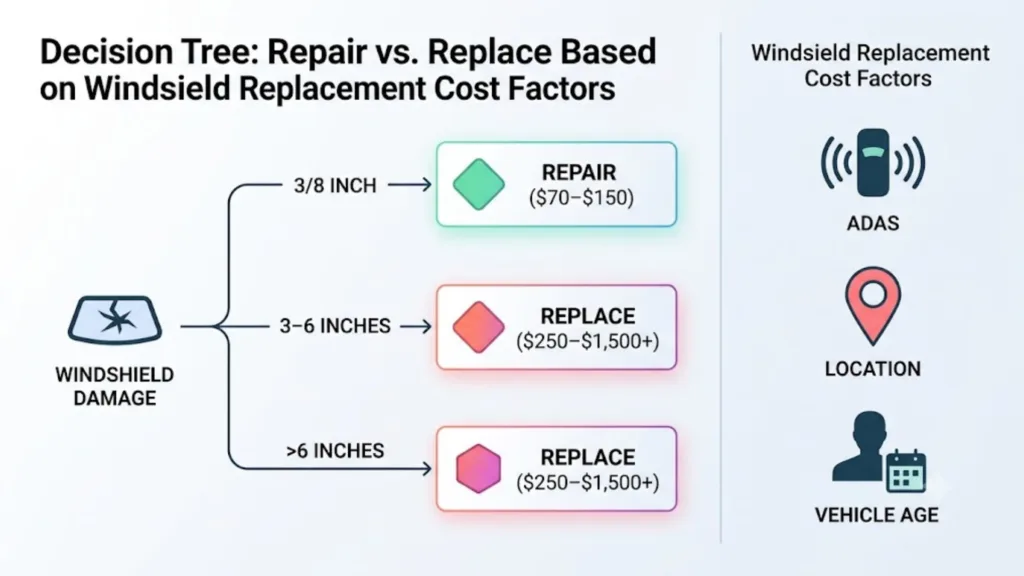
- Repair often beats replacement for smaller chips or cracks; when size and location allow, repairs can cost just $70–$150 and keep your original, safest glass in place.
- Always demand transparent, detailed quotes that break down glass type, labor, calibration, and warranty—protecting you from hidden fees and ensuring peace of mind.
These essentials arm you to book safe, reliable windshield service the smart way—for true clarity on the road and confidence mile after mile. For deeper tips and real-world examples, explore the full article now!
Windshield Replacement Cost Factors: What Really Drives Your Price
A single windshield crack can send your stress—and expenses—soaring. One driver’s repair totals just $300, while a neighbor’s seemingly identical vehicle racks up a bill over $1,000. Why do costs vary so widely—and how can you stay protected?
Windshield replacement isn’t just about swapping out a pane of glass. Your safety, vehicle features, and insurance coverage are all on the line. Whether you manage a fleet, sell vehicles, or just want to keep your daily driver safe, understanding these cost factors keeps surprises—and risks—to a minimum.
What makes the difference isn’t always easy to spot. Did you know built-in vehicle tech, like lane-keep sensors or panoramic windshields, can add hundreds to your quote? Prices also shift with your location, glass type, and whether you choose a provider who stands behind their work with industry certifications and strong warranties.
Knowing which details impact your cost empowers you to:
- Choose glass that fits your needs—OEM, dealer, or aftermarket
- Decide when costly upgrades, like ADAS recalibration, are truly necessary for your car
- Spot transparent quotes (and shop around with confidence)
- Coordinate insurance to maximize your savings
- Prioritize installation safety so you never compromise on clarity or integrity
With expert, straightforward guidance, you can avoid unnecessary extras, protect your vehicle’s value, and drive with peace of mind—every mile.
If you’ve ever wondered why one windshield quote is double another, or just want to be sure you’re paying for quality (not hidden markups), the following guide breaks down what really determines your final price.
Ready to see exactly where your money goes—and how to protect your investment and your safety on the road? Here’s what every smart car owner, fleet manager, or dealer needs to know next.
Understanding the Typical Range of Windshield Replacement Costs
Replacing a windshield in the U.S. typically costs between $200 and $1,500+, but understanding the details behind those numbers can save you time, money, and stress. Your exact cost depends on your vehicle’s make, model, age, and special features, as well as where you live and which glass you choose.
Most drivers will see prices for standard replacement in the $250–$800 range, with an “average” job landing near $400–$500. However, luxury vehicles and cars packed with technology can see costs soar far above the norm.
Price Ranges by Vehicle & Features
Here’s how prices break down for real-world scenarios:
- Economy or compact car: $210–$400
- Mid-range sedan/SUV: $300–$600
- Luxury or specialty vehicle: $400–$2,000+
- SUVs/trucks with ADAS, heating, or sensors: $400–$1,500+
If your car features ADAS (Advanced Driver Assistance Systems) like lane-keep assist or front cameras, expect additional fees for calibration—sometimes $200–$500 extra—since precise operation is critical for safety.
What Drives the Range—And What’s Included
Factors that push a job to the higher end:
- OEM glass (factory-grade, with logo)
- Built-in technology (heads-up display, heated glass, special sensors)
- Rare, curved, or panoramic windshields
- Complex labor or urban shop rates
A professional quote typically covers:
- The glass itself
- Certified labor
- Trim, adhesives, clips
- Old windshield disposal
- Basic calibration, if needed
Always ask if calibration for ADAS is included, as this may be billed separately. Not all shops or insurers treat ADAS the same way—some only cover aftermarket glass, which can save you hundreds but may affect resale value for newer cars.
Why Your Cost Isn’t “One Size Fits All”
Picture this: Two SUVs parked side by side. One owner pays $350, the other faces a $1,000 bill due to a panoramic heated windshield and sensors. Your cost can swing dramatically with features that aren’t visible at a glance.
Remember, “average” costs rarely apply to specialty vehicles or those with advanced tech. The only way to avoid surprises is by providing your exact car and feature list for a custom quote.
For peace of mind, focus on a provider that’s transparent about everything included. The right shop will make sure your price covers not just a new windshield, but also safe installation, certified technicians, and the all-important calibration for today’s advanced vehicles.
When budgeting, expect that extra features mean extra cost and remember: safety and clarity come first. “Clear Vision, Safe Driving” is more than a tagline—it’s what you deserve every mile.
Key Cost Drivers for Windshield Replacement
Understanding what impacts your windshield replacement cost helps you make safer, smarter decisions—whether you’re insuring a family car or managing a fleet.
“The kind of car you drive, the glass you choose, and your location each play a major role in the final bill.”
Let’s break down the essentials you need to scan before requesting a quote.
—
Vehicle Year, Make, and Model
Your car’s year, make, and model are the #1 cost driver.
- SUVs, trucks, luxury, and imported brands are usually pricier because of windshield size, design complexity, and proprietary features.
- Older or rare models often mean hard-to-find glass, making replacement more expensive.
- Many luxury brands use dealer-only or exclusive glass, which can double your out-of-pocket cost.
Picture this: A 2022 Subaru Outback may run about $430–$950 for a windshield with sensors; a 10-year-old economy sedan might cost closer to $250–$410.
—
Type of Replacement Glass
Choosing OEM, dealer, or aftermarket glass affects both price and peace of mind.
- OEM (original equipment manufacturer): Matches factory specs, often required on newer or leased vehicles. Typically the most expensive option.
- Dealer glass: High-grade, may lack logo, sits in the mid-price tier.
- Aftermarket: Budget-friendly, must meet safety standards, but quality and optical clarity may vary by brand.
Insurers often default to aftermarket glass unless you specifically request—and sometimes pay for—OEM.
“For maximum safety and long-term clarity, ask which glass type your insurer covers.”
—
ADAS Sensors and Calibration
Advanced features mean higher costs.
- Vehicles equipped with lane departure, front cameras, adaptive cruise, or rain sensors require ADAS recalibration after windshield replacement.
- Calibration is an extra but crucial charge—typically adding $150–$400 per job.
- Only certified shops can safely restore these features, ensuring your driver assistance technology works as intended.
A windshield replacement is part hardware, part high-tech precision.
—
Special Glass Features
Your windshield may include premium upgrades that subtly boost cost:
- Heads-up display (HUD)
- Heated glass or de-icer zones
- Acoustic interlayers for a quieter ride
- Advanced tints, UV/IR coatings
- Embedded antennas or brand-specific sensors
Specialist features require extra care—and often special-order parts—for safety and aesthetics.
—
Labor Rates, Location, and Shop Selection
Where you live and who you trust matters:
- Urban/metropolitan areas usually have higher labor rates and facility costs.
- National chains might price higher but often provide warranty coverage, certified techs, and strong customer support.
- Local shops can offer savings but vary in certification and workmanship quality.
Always verify technician certification and warranty terms before proceeding.
—
Insurance Coverage and Deductibles
Your insurance policy can shift the cost equation dramatically:
- Comprehensive coverage may leave you paying only a deductible—sometimes as little as $0 in certain states and policies.
- Repairs (like smaller chips) are often covered with no deductible, but full replacements usually go against your deductible amount.
- Each claim can affect your future premiums, depending on your provider’s policy.
“Know your coverage: It could be the difference between a $150 bill and a full replacement cost.”
—
Mobile Service, In-Shop Service, and Towing
Convenience affects your bottom line:
- Mobile services bring repairs to your home or office—sometimes for free, other times with a small fee.
- If your vehicle is undriveable, towing may be required (often covered by insurance or roadside assistance).
- In-shop replacement may offer more precise calibration for ADAS-equipped vehicles.
—
Type of Window: Front vs Rear vs Side Glass
Not all auto glass is created equal:
- Front windshields (laminated, high-tech) are most complex and pricey.
- Rear windows tend to range $200–$600, especially if they include defrosters.
- Side glass typically costs $150–$350, but specialty or panoramic glass designs cost more.
—
When you request a quote, always verify your vehicle’s details, glass type, and special features. Investing in certified, quality replacement protects both your clarity on the road and your vehicle’s value—because “clear vision means safe driving,” every time.
Repair Versus Replacement: Financial and Safety Implications
Windshield damage can mean either a simple repair or a full replacement—and knowing the difference will save you money while protecting your safety.
For many common chips and cracks, a quick repair is possible—and typically recommended if the damage is small and away from critical safety zones.
When is Repair Safe—and When Must You Replace?
Insurance industry experts—and most state guidelines—recommend repair if:
- The chip is less than 3/8 inch in diameter
- Cracks are under 3–6 inches in length (varies by state and insurer)
- Damage is NOT in the driver’s direct line of sight
- The windshield’s structural integrity isn’t compromised
Replacement is necessary if:
- Damage exceeds these measurements or there are multiple cracks
- The crack intrudes into ADAS sensor zones (e.g., behind the rearview mirror)
- The glass is shattered or there’s deep pitting
“Picture this: a quarter-sized chip in the lower passenger side can be fixed in 30 minutes—often for $70–$150—saving you time and money versus a full replacement.”
Financial Impact: Repair vs. Replacement
- Repairs are often no-cost with comprehensive insurance—many policies cover repairs with zero deductible
- Replacements typically range from $250–$800, but can exceed $1,000 on luxury or ADAS-equipped vehicles
Choosing repair first can prevent cracks from spreading, helping you avoid a costly replacement and keep original factory seals intact—critical for safety and resale value.
Safety First: Know When to Invest
Even if repair is possible, never compromise safety:
- Cracks near the glass edge weaken structure—always replace
- Chips in driver’s view can impair vision—choose replacement for peace of mind
- If your vehicle features ADAS sensors or cameras, replacement usually requires precise calibration for system reliability
Insurance Coverage & Rules of Thumb
- Most insurers limit repairs to cracks <6 inches and chips not in driver view
- Insist on a certified technician for both repair and replacement to preserve glass warranty and meet all safety standards
A tiny chip today can become tomorrow’s costly crack—so act quickly, and always put safety and quality over short-term savings. Remember, retaining your original windshield when possible keeps costs down and maintains manufacturer-installed safety.
Clear vision and safe driving start with smart decisions about windshield care.
Practical Pricing Considerations and Smart Shopping Tips
Getting the best value—and the safest outcome—begins with a clear, step-by-step approach to windshield replacement.
Smart car owners and fleet managers know: every detail matters when comparing prices.
—
How to Request and Decode Quotes
A reputable shop will break down costs with transparency.
Always request that your quote specifies:
- Glass type (OEM, dealer, aftermarket)
- Features included (heated glass, rain sensors, tint, camera mounts)
- ADAS calibration (required or not, and if it’s included)
- Line-item costs for labor, disposal, mobile service, and taxes
- Warranty details
Picture this: You receive two quotes—one lists only a lump sum, while the other outlines every component. The second quote protects you from “surprise fees.”
“Insist on quotes that spell out every detail—parts, labor, and any additional services—to avoid unwelcome surprises.”
—
Understanding and Comparing Warranties
Choose providers that back up their work.
Look for warranties that include:
- Leaks and wind noise protection
- Coverage for installation errors or stress cracks
- Multi-year or lifetime term
Ask about technician certifications and whether the shop meets industry standards for ADAS calibration and glass installation.
“A strong warranty is your shield against future issues—never settle for less than certified workmanship.”
—
Insurance Coordination and Optimizing Coverage
Review your insurance policy before agreeing to a shop.
Clarify with your agent:
- Which shops are preferred providers
- If OEM glass is covered, or if they require aftermarket
- Your glass deductible and any “zero-deductible” provisions
Knowing these details can save hundreds—many states offer $0 deductible for glass, while others apply your full collision deductible.
“Double-check your policy and ask your insurer for specifics—glass coverage varies more than you might think.”
—
Evaluating Value Based on Vehicle Age, Features, and Priorities
Not every car — or driver — needs the same solution.
Consider:
- OEM or ADAS recalibration for high-value or newer vehicles
- Reliable, safe aftermarket glass for older models without advanced features
- How your choice can affect resale value and long-term safety
Visualize choosing OEM glass for your new model with front cameras—it’s an investment in both safety and peace of mind.
—
Getting Multiple Quotes and Assessing Service Quality
Always collect at least 2–3 detailed quotes with consistent glass types.
Compare:
- Pricing, feature inclusions, warranty offerings
- Shop reputation and verified customer reviews
- Technician certifications and safety record
The cheapest quote isn’t always the best, especially if safety and long-term reliability matter most.
“A professional provider will prioritize your security, clarify every charge, and stand behind their work with transparent guarantees.”
—
A little research goes a long way—clarity, communication, and quality guarantees are your best tools for getting safe, affordable windshield replacement without surprises.
Mastering Windshield Replacement Cost Factors: Your Path to Safe, Smart Decisions
Choosing the right approach to windshield replacement means prioritizing both your safety and your investment. By understanding the true cost drivers and knowing what to look for in a professional service, you set yourself up for clarity on the road and peace of mind in your vehicle.
When you focus on transparent pricing, quality materials, and expert installation, you protect not just your car—but everyone inside. A smart approach ensures every dollar you spend is invested in long-term value, reliability, and, ultimately, your confidence behind the wheel.
—
Here are the key actions to drive your decision:
- Verify your vehicle’s exact year, make, and features before requesting quotes—this ensures precise pricing and prevents last-minute surprises.
- Insist on detailed, transparent quotes that outline glass type, calibration needs, and every included service—clear communication protects your wallet and your safety.
- Choose providers with certified technicians, strong warranties, and a reputation for quality—don’t cut corners when it comes to your vehicle’s protection.
- Review your insurance policy carefully, clarifying if OEM glass or additional features are covered, so you can make the most informed financial decision.
- Act quickly on repairs or replacement to prevent small chips or cracks from escalating into costly safety issues.
—
Your next steps are simple and powerful:
- Snap a few photos of your windshield’s damage and vehicle details.
- Contact reputable, certified auto glass shops for written, detailed quotes—compare more than just the bottom line.
- Confirm what your insurance covers, and make sure your provider values your safety as much as you do.
- Schedule your replacement or repair promptly—don’t let small issues become big risks on the road.
—
Every mile you drive is safer and clearer when you choose quality, precision, and a team who puts your needs first.
Remember: Safe driving starts with a clear view. Trust in experts who see your journey—and your safety—as their top priority. “Clear Vision, Safe Driving” isn’t just a promise. It’s peace of mind, every day.
FAQ
1. What are the main Windshield Replacement Cost Factors that affect my final price?
The primary Windshield Replacement Cost Factors include your vehicle’s year, make, and model (the #1 driver), glass type (OEM vs. aftermarket), ADAS sensor calibration requirements ($150–$500), special features like heated glass or heads-up displays, your geographic location, and shop certification level. Labor rates vary significantly between urban and rural areas, with national chains typically charging more than local shops but offering stronger warranties and certified technician guarantees.
2. How do Windshield Replacement Cost Factors differ between luxury and economy vehicles?
Windshield Replacement Cost Factors create dramatic price variations: economy cars typically cost $210–$400, while luxury vehicles range from $400–$2,000+. Luxury brands often use exclusive, dealer-only glass, and their panoramic or heated windshields require special ordering and custom installation. Advanced technology in luxury vehicles—lane-keep sensors, adaptive cruise cameras, and premium tints—significantly increases Windshield Replacement Cost Factors beyond the glass itself.
3. What role does ADAS calibration play in Windshield Replacement Cost Factors?
ADAS calibration is a critical Windshield Replacement Cost Factor, adding $150–$500 to your bill when your vehicle has lane-keep assist, front cameras, adaptive cruise control, or rain sensors. After windshield replacement, precise recalibration by certified technicians is essential for safety and system reliability. Not all shops include this service, so always clarify whether ADAS calibration is part of your quote when evaluating Windshield Replacement Cost Factors.
4. How can I reduce Windshield Replacement Cost Factors through insurance coverage?
Insurance dramatically impacts Windshield Replacement Cost Factors: comprehensive coverage may require only a deductible ($0–$500, depending on your policy), while many states offer $0 deductible specifically for glass claims. Repair claims often have no deductible. Always review your policy to understand which glass types (OEM or aftermarket) are covered, as this alone can save hundreds and significantly reduce your Windshield Replacement Cost Factors.
5. When should I choose repair over replacement, considering Windshield Replacement Cost Factors?
Repair is financially and safely preferable when Windshield Replacement Cost Factors don’t yet justify full replacement. If damage is under 3/8 inch diameter for chips or 3–6 inches for cracks, and not in the driver’s line of sight, repair costs just $70–$150. However, if cracks exceed these measurements, intrude into ADAS sensor zones, or compromise structural integrity, replacement becomes necessary despite higher Windshield Replacement Cost Factors—safety always takes priority.
Thank you for choosing Discount Auto Glass. Fast, reliable service with a lifetime guarantee. Visit us or enjoy our mobile service.