Can Cracks in Auto Glass Be Repaired? Expert Answers
Cracks in auto glass can be repairable or not — knowing which is which matters. These key insights give you the facts, safety priorities, and expert tips you can use right now. Each takeaway is designed for quick reference, so you’ll know exactly what to do for your safety, visibility, and vehicle value.
Act quickly on any crack or chip—even minor damage can escalate, with studies showing cracks can grow by up to 80% after a few days of stress or temperature shifts.
Most cracks under 6 inches and away from the glass edge are repairable—if you can cover it with a dollar bill, there’s a good chance a safe, lasting repair is possible.
Edge cracks, multiple chips, or damage in the driver’s view almost always require fullglass replacement to maintain your safety and meet legal/insurance standards.
Professionally repaired windshields restore up to 98% of original strength using advanced resins and vacuum/pressure technology—ensuring long-term clarity and protection.
DIY kits only suit chips smaller than a quarter or simple cracks up to 6 inches—anything larger, near the edge, or affecting visibility should always go to a certified technician.
Clean, dry, and stabilize your damaged glass before repair—avoid moisture, car washes, or pressure until professionals can assess and fix the crack.
Insurance often covers professional repairs with no deductible—ask your provider, as acting fast may save you hundreds over a future replacement.
“Clear Vision, Safe Driving” means expert evaluation first—always get a quick assessment to ensure the right fix and protect your vehicle’s integrity.
Stay proactive and consult the full article for expert guidance, real-world scenarios, and safety-driven answers that keep your auto glass—and your confidence—intact.
Cracks in Auto Glass: The Hidden Danger You Can’t Ignore
Picture this: You’re about to start your day, but a thin crack spiderwebs across your windshield overnight. Should you panic, patch it yourself, or book a professional fix? You’re not alone—windshield cracks are responsible for millions of insurance claims each year, and the question of repair vs. replacement is more urgent than ever.
Even a hairline crack isn’t just cosmetic. It can compromise your visibility, weaken your vehicle’s structure, and—most importantly—put your safety at risk before you know it.
Every driver, car owner, or fleet manager eventually faces the same dilemma:
Can this crack really be repaired, or will you need a full replacement?
How urgent is the damage—and how long can you safely wait?
What’s the difference between a store-bought kit and a certified technician’s repair?
Knowing the answer can mean the difference between a simple, affordable fix and costly risks down the road.
This guide delivers:
Clear, expert-backed criteria for knowing what’s safely repairable
Inside knowledge on professional repair steps versus DIY outcomes
Practical tips to extend the life of your auto glass
Non-negotiable safety scenarios when only replacement will do
Answers to the most common questions and myths
You’ll gain confidence in every decision by seeing what the pros look for, what leading insurers require, and how fast action preserves both your safety and your investment.
From first spotting a chip to getting back on the road with clarity, every section puts your peace of mind first—with trusted advice designed for real-world drivers and the people who keep them safe.
Let’s begin by revealing what truly causes those pesky cracks—and why every flaw in your glass matters more than you might think.
Understanding Cracks in Auto Glass: Causes, Types, and Safety Implications
Every crack in your auto glass signals a potential safety concern, no matter how minor it appears.
A single pebble, sudden temperature drop, or daily road stress can cause damage that quickly affects both your visibility and the overall integrity of your vehicle.
What Causes Auto Glass Cracks?
Most cracks form due to common factors, including:
Rock or debris impacts: Sudden hits from road debris are the top cause of chips and cracks.
Thermal stress: Dramatic temperature changes—like a hot day followed by cold rain—can cause glass to expand or contract, creating cracks.
Structural flex: Twisting or flexing of your vehicle frame, especially after an accident or hitting a large pothole, puts pressure on glass.
Pressure changes: Slamming doors or rough handling can trigger or worsen existing weaknesses.
You’ll often see these stresses at work during harsh winters or on busy highways.
The Structure of Auto Glass: Tempered vs. Laminated
There are two main types of auto glass:
Laminated glass: Used for windshields; features a tough plastic layer sandwiched between glass sheets. It keeps cracks from spreading rapidly and holds the glass together on impact.
Tempered glass: Used for side and rear windows; heats and rapidly cools for strength, but when broken, it shatters into small, blunt pieces for safety.
Windshield cracks can sometimes be stabilized and repaired, while tempered glass almost always needs replacement.
Recognizing Types of Auto Glass Damage
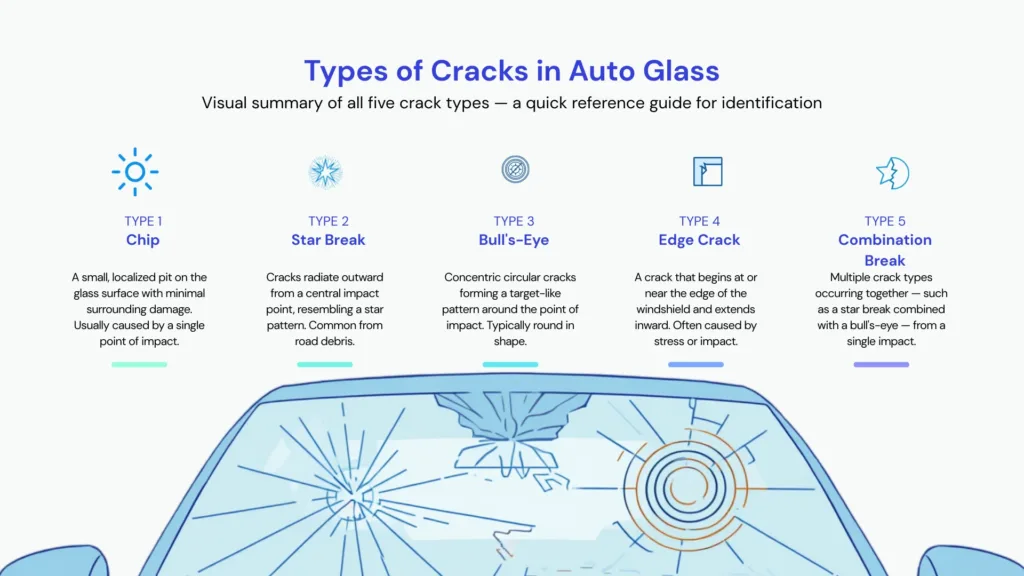
Auto glass cracks aren’t all the same. Common types include:
Small chips and pits: Tiny marks often caused by road grit—if caught early, these are usually repairable.
Star breaks and bull’s-eyes: Central impacts with radiating lines or circular patterns; often repairable if under an inch across.
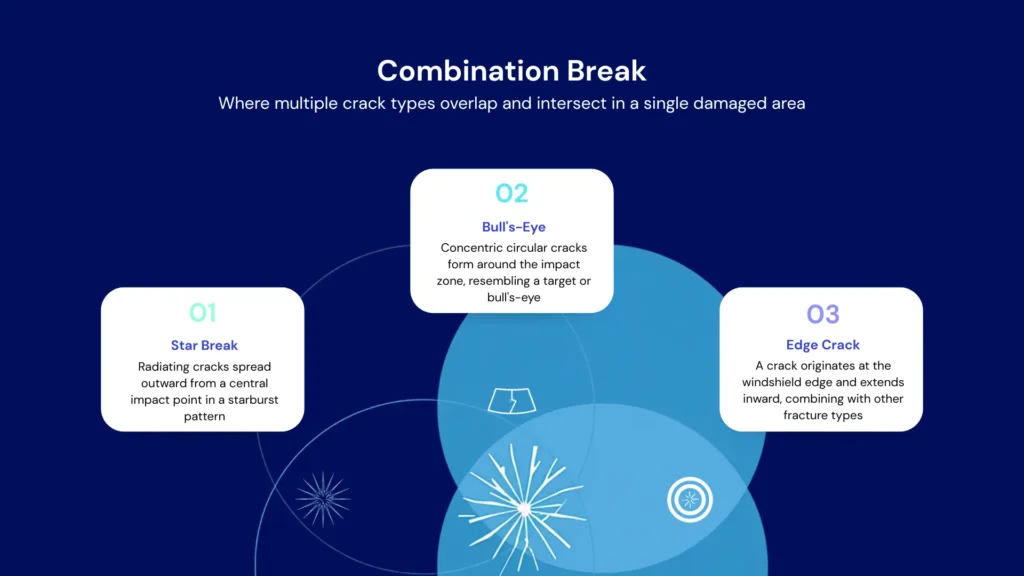
Half-moon and combination breaks: Irregular or mixed damage that can be more difficult to fix.
Long, edge, and stress cracks: Cracks over 6 inches, cracks reaching the edge, and those without a clear impact point usually require replacement.
Multiple impact points and shattering: If the glass is fractured in several places, it often means structural compromise and a full replacement is safest.
Why Fast Action on Cracks Matters
“Even a tiny crack can spread and turn your entire windshield into a safety risk overnight.”
A minor chip today can become a major crack tomorrow, especially after temperature swings or bumpy drives.
Key reasons to act quickly:
Safety: The windshield is vital for airbag deployment and overall vehicle strength in a collision—damage lowers its ability to protect you.
Visibility: Cracks distort your vision and, in harsh sunlight or rain, can become distracting hazards.
Insurance compliance: Many insurers require timely repair or replacement for coverage to remain valid.
No matter the crack’s size or shape, your safety depends on immediate, professional attention.
Takeaway: Picture this—your windshield is not just glass; it’s a frontline safety barrier. Addressing even the smallest crack right away keeps your view clear and your driving secure.
How Auto Glass Cracks Are Professionally Repaired
The Resin Injection Process: Step-by-Step
When you notice a crack in your windshield, the professional repair process starts with a precise assessment.
Safety, longevity, and clarity are the priorities—every step matters for your protection on the road.
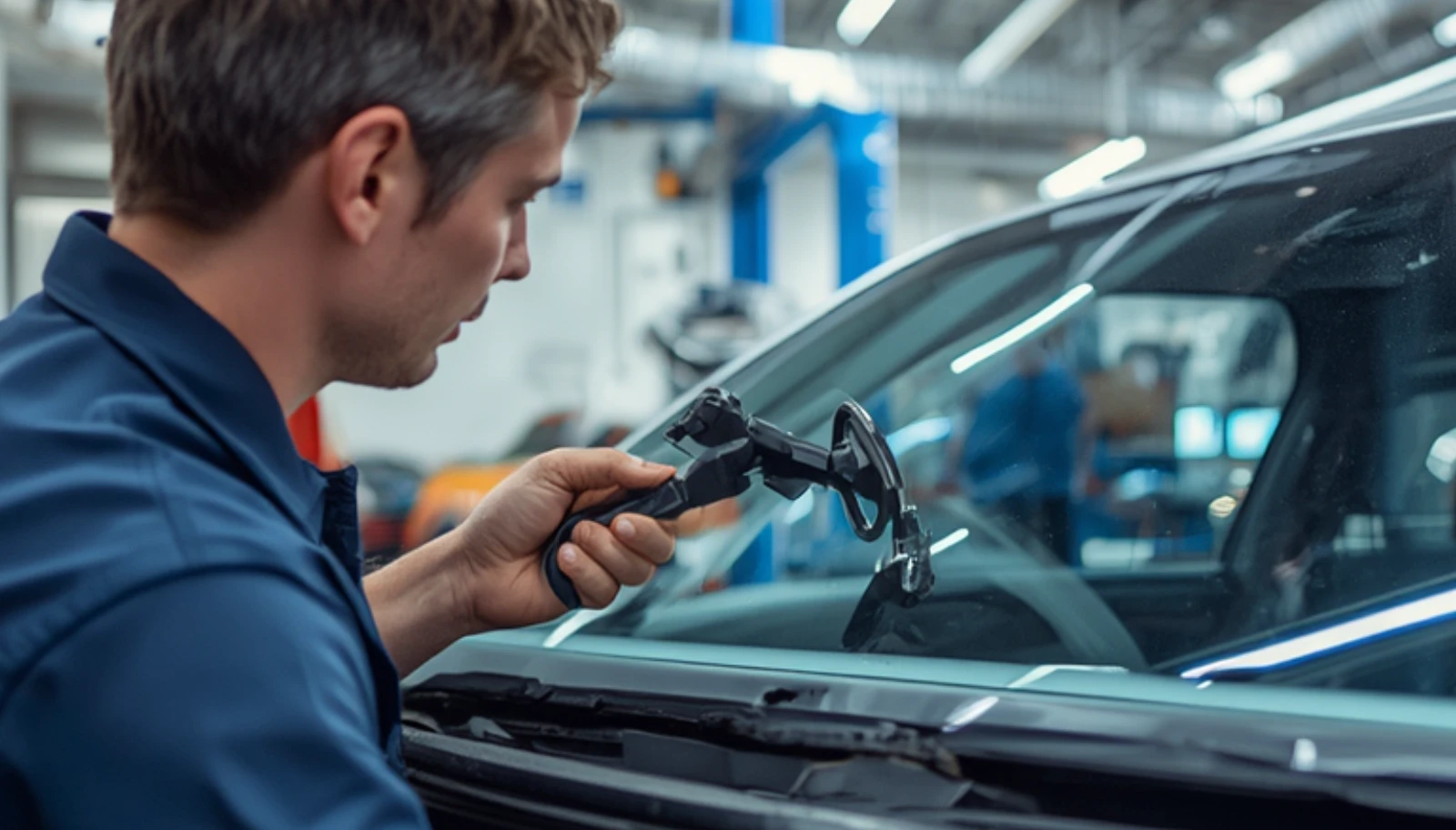
Picture this: A certified technician examines the damage with crisp focus, using specialized gauges to measure crack size, depth, and location.
If the crack is within repairable limits (typically under 6 inches and away from the edge or driver’s line of sight), the expert moves forward confidently.
“Your safety is our commitment. Every repair starts with a thorough inspection,” as our team emphasizes.
—
Meticulous Cleaning & Prepping: The Key to Lasting Results
Before any resin touches the glass, the area is thoroughly cleaned and all debris removed.
A clean surface ensures the resin bonds fully for maximum durability. Prepping the area properly prevents contamination that could compromise the repair.
The site is dried and ready, setting the stage for a seamless fix.
—
Advanced Resin Injection: Precision Under Pressure
Now, specialized injectors come into play:
A vacuum is applied to remove trapped air from the crack.
Next, pressure injects the customized resin deep into every fissure.
The technician selects the resin viscosity based on the exact crack type—fine for tiny cracks, stronger for bigger ones.
This process guarantees a strong internal bond and prevents the damage from spreading.
“Perfect resin flow under vacuum is why professional repairs last,” summarizes a leading technician.
—
UV Curing & Polishing: Restoring Strength and Clarity
After resin fills the crack, UV light activates the hardening process.
Most modern shops use LED or high-powered UV lamps for rapid curing (often under 30 minutes).
Excess resin is gently scraped away and the spot is polished, restoring a smooth, transparent finish.
Your glass regains not just its strength, but also its clear, unobstructed visibility—and you drive away with lasting safety.
—
Quality that Matches Your Standards
Professional shops rely on:
Cutting-edge vacuum/pressure systems
High-grade resins
LED/UV curing units
These steps result in repairs that help restore up to 98% of windshield strength and eliminate unsightly cracks.
You leave with peace of mind, knowing your glass is protected by craftsmanship and warranty.
—
The most important takeaway? Swift, expert repairs keep you safe, save you money, and preserve your view. Choose professional service for results that look as good as they perform—every time you drive.
Determining If a Crack Is Repairable: Expert Criteria and Limitations
What Makes a Crack Eligible for Repair?
When deciding if auto glass cracks can be safely repaired, professionals use a strict checklist to prioritize your safety.
Size and length matter most—cracks up to 6 inches (about the length of a dollar bill) are usually considered repairable by most shops, while advanced specialists may tackle lengths up to 12 inches using specialized techniques.
Cracks near the edge of the windshield or in the driver’s main line of sight are often marked for replacement; edge cracks spread rapidly and can compromise structural integrity.
Visualize this: If you can cover the chip with a quarter or the crack with a dollar bill, it’s likely eligible for repair.
Here’s what experts review:
Size: Chips smaller than 1 inch; cracks up to 6 inches (standard) or 12 inches (specialists).
Location: Damage not within 2 inches of the glass edge; not directly in the driver’s field of vision.
Type: Stone chips, bull’s-eyes, and short star breaks are usually safe to repair.
Number: No more than 3 total chips on the same windshield; clustered chips may require replacement.
Depth and Age: Surface-level, recent cracks (under 48 hours old) are easier and more reliable to fix.
Real-World Scenarios and Guidelines
Imagine your windshield has a 5-inch star break sitting 2 inches from the edge—while length is within scope, its proximity to the edge makes replacement the safer route.
If you spot a combination break in the center, but it’s less than quarter-sized and less than 2 days old, repair is usually possible with excellent results.
Insurance industry trends and leading repair brands agree—cracks extending to the edge, multiple clustered chips, or anything affecting the structural (laminated) layer can’t be safely fixed.
Some providers offer specialized repairs for longer center-field cracks, but only under optimal conditions.
Fast facts for your decision:
Most insurance policies follow the “dollar bill rule”—if the crack is longer, replacement is recommended.
Complex breaks or any damage in your direct line of sight typically call for a new windshield.
Damages older than a few days or exposed to dirt and moisture may not bond correctly, making safe repair uncertain.
A single, clean, center-field crack under 6 inches? That’s a prime candidate for a professional, guaranteed repair.
For peace of mind, always ask a certified technician for a quick assessment—“Clear Vision, Safe Driving” starts with reliable guidance and prioritizing your safety.
Ultimately, the key takeaway: Only certain sizes, types, and locations of cracks are repairable—expert inspection ensures that every decision protects your vehicle, your visibility, and everyone on the road.
DIY vs. Professional Auto Glass Repair: Making the Right Choice
DIY Repair: Benefits, Best Uses, and Limitations
DIY auto glass repair kits are widely available—and for the right chip or crack, they’re surprisingly effective.
Designed for small damage: Most kits work best on chips smaller than a quarter, or cracks up to 3–6 inches long.
Step-by-step simplicity:
Clean the glass and ensure the area is dry.
Attach the adhesive pedestal for resin delivery.
Inject resin using a syringe or plunger.
Cure with UV light—outdoors in sunlight or using a lamp.
Remove excess resin and polish for clarity.
Picture this: you’re in your driveway, tackling a quarter-sized chip on your windshield, aiming for clear results in under an hour.
Common pitfalls include rushing cure time, uneven resin application, and working in improper temperatures (ideal: 50–75°F). DIY repairs may leave minimal distortion and rarely come with a warranty, so visibility and safety trade-offs should be top of mind.
“Small cracks can quickly spread—DIY kits offer a fast fix, but not always full peace of mind.”
Professional Repair: When Expertise Matters Most
Certain cracks demand a professional touch, especially if you want the job done with total assurance.
Choose expert repair when:
Cracks are over 6 inches, near glass edges, or in structural zones.
There are multiple chips or complex break patterns.
The vehicle is a fleet car, dealership model, or essential to your work.
Professionals use:
Advanced vacuum and pressure injection systems for deeper, more consistent resin fill.
Multiple resin viscosities for different break types.
Certified technicians and guaranteed results, often with same-day service.
Every technician’s process is visible and transparent, so the repair not only looks flawless but helps keep you safe on the road.
“For your peace of mind, certified repair keeps your windshield strong and your vision clear—no compromises.”
Cost, Time, and Long-Term Value
Cost matters, but so does what you get for it.
DIY kits: typically $15–$40, but rarely include professional assessment or warranty.
Professional repairs: often $70–$130, and may be covered by insurance (many policies waive the deductible for repairs).
Drive-away time: as little as 30 minutes with expert UV curing, but always confirmed clear before handoff.
Choose a professional for maximum vehicle value retention and safety assurance. “A $100 repair today can prevent a full windshield replacement—often $300 or more—tomorrow.”
No matter your route, the right repair helps you drive with confidence. Swift attention to cracks, whether DIY or pro, ensures clear vision and safe driving every mile.
Expert Tips for Maximizing Auto Glass Crack Repair Success
Pre-Repair Best Practices
Cracked auto glass can quickly go from minor to major.
Immediate action protects your safety and your wallet.
Repair chips and cracks sooner rather than later—cracks left unrepaired can expand up to 80% after just a few days of temperature swings or pothole hits.
Keep the damaged area dry and skip car washes or rain exposure before your repair.
Avoid slamming doors, rough roads, or blasting the HVAC—any vibration or pressure can rapidly worsen the crack.
Don’t use chemical cleaners or ammonia-based glass sprays on or near the crack. Contamination can weaken the resin’s bond.
“Picture this:” You’re on your daily commute; one jolt on a speed bump could double a small crack by lunchtime.
During and After Repair
Getting the best possible result comes down to following the right steps and protecting your glass after the fix.
Follow all kit or professional instructions precisely—especially resin mixing, vacuum/pressure cycling, and UV cure times.
Allow the repair to cure fully for at least 24 hours—keep your car out of direct sunlight or extreme cold if possible.
Inspect the repaired area: If you still see air bubbles, haze, or spreading lines, prompt re-evaluation is needed.
If new cracks appear or clarity is not restored, have an expert take a second look. High-quality repairs are almost invisible and structurally sound.
Quotable moment:
“A strong repair keeps your view crystal-clear—the best fix is the one you soon forget is there.”
Maintenance and Monitoring Post-Repair
Consistent monitoring extends your windshield’s life and safeguards everyone on the road.
Check the repaired spot regularly—especially after storms, heat waves, or further impacts.
Document any changes and contact your repair shop or insurer right away if the crack grows or a new one forms.
Ask about warranties on repairs: Professionals often guarantee repairs against spreading for the vehicle’s lifetime.
Visual tip: Imagine running your finger over smooth, clear glass with no bump or cloudiness—how it should look after the right repair.
Shareable wisdom:
“A repaired windshield deserves as much attention as a new one—inspect it, care for it, and act fast if anything changes.”
A swift, precise approach is the surest path to safe, lasting results. Take action early, follow post-repair tips, and check your glass regularly—you’ll drive with confidence and clarity mile after mile.
When Replacement Is the Safe, Expert-Recommended Option
Clear Scenarios Necessitating Replacement
When it comes to windshield safety, experts agree that certain types of damage mean repair just isn’t enough.
If you spot any of these issues, replacement is the only safe choice:
Cracks longer than 6 inches (try the “dollar bill” test—if the crack is longer, don’t risk it)
Cracks reaching or starting within 2 inches of the windshield edge
Damage directly in your vision—anything in the “critical viewing area” in front of the driver
Clusters of chips or too many impacts that threaten structural strength
Damage that goes through the inner laminate layer or shows visible weakness
Picture this: you’re on a busy highway and a stone sends a crack spidering across the windshield—it reaches the edge within minutes. In these moments, your safety and your passengers depend on a complete replacement.
The Safety-First Approach
Why are experts strict about replacement in these cases? The answer is always structural integrity and clear vision.
A windshield that’s compromised won’t protect you in a rollover or front-end accident
Airbag deployment relies on an intact windshield—a cracked one can cause airbags to fail
Laws in many states and insurance policies prohibit repairs in these critical areas
Most vehicles require replacement for cracks over 6 inches or in the driver’s direct sightline—a standard recommended by both glass trade associations and leading auto manufacturers.
Expect a typical, quality windshield replacement to take 1–2 hours and cost between $200 and $500 (insurance may cover all or part of this for many drivers).
“When in doubt, trust the experts—your windshield is a vital safety system, not just a piece of glass.”
Choosing a Quality Provider
Don’t trust your vehicle’s safety to a cut-rate repair.
Look for:
Certification (such as AGRSS, NGA, or equivalent)
Transparent pricing, clear warranties, and use of OE-quality glass/materials
Locally trusted experts with a reputation for customer care
There’s nothing more reassuring than a provider whose work is precise, efficient, and backed by real guarantees.
Imagine crisp, professional technicians using state-of-the-art tools under bright shop lights—a scenario that highlights both trust and quality.
“A safe windshield starts with the right hands—choose skill and a customer-first approach every time.”
When faced with significant damage, replacement isn’t an upsell—it’s a necessity for your safety and clear vision. Acting swiftly and trusting certified professionals ensures your vehicle is ready for whatever the road brings next.
Frequently Asked Questions and Myths About Auto Glass Crack Repair
Wondering whether that crack in your windshield can really be fixed—or if some advice you’ve heard is true?
Let’s break down the most common questions and myths, so you know what’s fact, what’s fiction, and what steps to take next.
Myths: Not All Cracks Can Be Repaired
It’s a common myth that all cracks are repairable.
In reality:
Cracks longer than 6 inches (about the length of a dollar bill) are usually not safely repairable by most shops.
Any crack reaching the windshield edge, or multiple clustered chips, often requires a full replacement for safety.
Damage in the driver’s direct line of sight is rarely fixed due to possible minor distortion—safety always comes first.
“Not every crack is a quick fix—sometimes replacement is the only safe path.”
DIY vs. Professional Results: Durability and Clarity Differences
Some people believe that DIY resin kits work just as well as professional repair—but this isn’t the case for most damage.
Key differences include:
DIY kits are best for chips smaller than a quarter and cracks up to about 3–6 inches; professional shops safely repair cracks up to 12 inches using stronger resins and precise equipment.
Pros use vacuum and pressure cycles and select resins with the exact viscosity for each scenario—delivering a clear, long-lasting repair.
Many professionals guarantee their work and offer warranties for extra peace of mind.
“Professional glass repair: more than just resin—it’s the difference between clarity and compromise.”
Speed, Insurance, and What to Expect
You may wonder how fast your repair will be, or if you can drive right away.
Here’s what to know:
Most repairs take 30–60 minutes and you can usually drive immediately afterward.
Many repairs are covered by comprehensive insurance with zero deductible—always check your policy.
Shop tech has evolved: expect LED/UV curing lamps and improved resins for stronger, faster bonds.
If you’re unsure, just ask for a free inspection or quote—most reputable services will walk you through the process and insurance claim.
Making Safe, Smart Choices—Your Next Steps
If you spot a crack or chip:
Schedule a professional inspection to evaluate repair vs. replacement.
Avoid washing or adding pressure to the damaged area until assessed.
Contact your insurance if your glass coverage is active—many waive the deductible for repairs.
Picture this: A busy morning, sunlight catching a spiderweb crack—one call, and a certified tech is restoring your clear view in under an hour.
Staying informed ensures your next step is safe, cost-effective, and preserves both your vehicle value and your peace of mind.
Your clearest, safest drive starts with expert evaluation and informed action.
Protecting Your Drive Starts With the Right Decision
Every crack in your auto glass is more than cosmetic—it’s a choice point for safety, clarity, and peace of mind. Acting early and making informed decisions means you’re not just fixing glass; you’re protecting everyone on the road and extending the life of your vehicle.
The best results come from being proactive and choosing expertise when it matters most. With the right knowledge, you can confidently handle any chip or crack before it becomes a hazard.
—
Key takeaways to keep you safe and empowered:
Act quickly on any chip or crack—delaying repairs risks further damage and reduces safety.
Assess the size, location, and type of damage before deciding between DIY and professional repair.
Professional repairs restore strength and visibility—especially for larger, edge, or complex cracks.
Always prioritize certified technicians and trusted providers for replacements and tricky repairs.
Follow all care and maintenance steps post-repair to keep your view clear and your vehicle protected.
—
Ready to take action?
Schedule a professional inspection if you notice any crack, no matter how small.
Avoid washing or pressurizing the glass until you’ve had an expert evaluation.
Ask about warranties and insurance options to make the safest, most cost-effective choice.
Share this knowledge—help friends and family keep their drive safe.
—
Your windshield is your frontline of defense—trusting experts and acting fast ensures a safer journey every time you hit the road.
“Clear vision, safe driving.” The best trip is the one where you see every mile ahead—don’t let a small crack keep you from the journey you deserve.
FAQ
Can all cracks in auto glass be repaired?
No, not all cracks in auto glass are repairable. Cracks under 6 inches and away from the edge are usually fixable, while longer cracks, edge damage, or clusters of chips typically require full replacement.
How long does it take to repair cracks in auto glass? Most cracks in auto glass can be repaired in 30–60 minutes using vacuum and pressure resin injection, followed by UV curing, allowing you to drive away shortly after service.
Does insurance cover repairing cracks in auto glass?
Many comprehensive insurance policies cover repairing cracks in auto glass with zero deductible, so it’s worth checking your policy before paying out of pocket.
What causes cracks in auto glass to spread?
Cracks in auto glass often spread due to temperature swings, road vibration, structural flexing, or pressure changes, which is why prompt repair is strongly recommended.
Are DIY kits effective for fixing cracks in auto glass?
DIY kits can handle small cracks in auto glass, typically under 6 inches, but professional repair offers stronger resins, better equipment, and warranty protection for lasting results.
Thank you for choosing Discount Auto Glass. Fast, reliable service with a lifetime guarantee. Visit us or enjoy our mobile service.