
June 23, 2026
Preventive Measures for Auto Glass Maintenance 2026
Proactive auto glass care is vital for safe, stress-free driving and can significantly reduce long-term repair costs. By understanding your auto glass, committing to regular maintenance, and choosing certified experts, you’re investing in your safety, satisfaction, and the reliability of every ride.
- Prioritize regular inspections by performing quick weekly checks for chips, cracks, or distortion—just two minutes can prevent a costly replacement.
- Address glass damage immediately—chips smaller than a credit card can often be repaired, but delays lead to cracks in 70% of cases, risking both safety and expense.
- Clean using ammonia-free, tint-safe cleaners and microfiber towels; monthly deep cleans and interior wipe-downs ensure clear sightlines and early problem detection.
- Maintain wiper blades and washer systems—replace blades every 6–12 months and keep fluids topped up, as neglected wipers can cause avoidable scratches and reduce visibility.
- Protect against environmental hazards by avoiding parking under trees, near construction sites, or in harsh sunlight, and use sunshades to minimize thermal stress on your glass.
- Implement structured maintenance for fleets by establishing clear inspection schedules, digital reporting tools, and standardized driver training to see up to a 30% drop in unexpected repairs.
- Follow precise post-replacement protocols—wait at least 24–48 hours after new glass installation before washing or aggressive driving to ensure a secure, leak-free bond.
- Ensure ADAS calibration after windshield replacement for vehicles with driver assistance features; only trust certified technicians to protect critical safety systems and warranty compliance.
Protecting your view means protecting your peace of mind—review the full guide for step-by-step preventive solutions and drive with confidence knowing your safety comes first.
The Complete Guide to Preventive Measures for Auto Glass Safety
Imagine spotting a tiny chip on your windshield after a routine drive—did you know that over 70% of untreated glass chips quickly become long cracks, often requiring full replacement? Keeping your auto glass healthy isn’t only about clear views; it’s about protecting everyone in your vehicle and avoiding unexpected downtime or costly repairs.
Daily driving exposes your glass to road debris, sudden temperature changes, and even unnoticed installation flaws. For families, fleet owners, and dealerships, ignoring routine maintenance can compromise not only visibility but also the structural strength that safeguards passengers during accidents.
But here’s the good news: a proactive approach offers you more than peace of mind. With simple, regular habits, you can:
- Minimize safety risks for every mile traveled
- Avoid sudden, expensive repair bills and preventable replacements
- Maintain manufacturer standards for modern features like ADAS (Advanced Driver Assistance Systems)
- Ensure seamless operation for commercial fleets and personal vehicles alike
This is about building habits—not headaches. You’ll discover practical, time-saving steps that fit into your schedule, empowering you to spot issues before they become urgent. We’ll also share why a clear windshield matters more than ever, especially as technology and safety systems play a bigger role on the road in 2026.
Customer safety is at the core of everything we do, and these preventive measures are designed to support long-term reliability, protect your investment, and deliver the satisfaction you deserve—driven by clear standards, transparent care, and a commitment to excellence.
Ready to secure every journey with confidence? Let’s start by understanding exactly how your auto glass functions—and what puts it at risk.
Understanding Auto Glass and Its Vulnerabilities
What Makes Up Your Auto Glass
Every vehicle relies on multiple types of auto glass for safe, clear driving.
The main categories are:
- Windshield: The primary barrier against wind, debris, and weather.
- Side and Rear Windows: Allow for passenger visibility and emergency exits.
- Sunroofs: Bring in daylight but are subject to unique stresses.
Each glass type is designed for a specific location and function, directly impacting both protection and convenience.
Laminated vs. Tempered: Why It Matters
Auto glass uses advanced materials to keep you safe on the road.
- Windshields typically feature laminated glass—two panels sandwiching a durable plastic layer—so cracks won’t shatter the panel.
- Side and rear windows, and most sunroofs, are made from tempered glass, engineered to burst into pebble-sized pieces to reduce injury risk.
Laminated windshields add structural integrity—they help keep the roof from collapsing during rollovers, while tempered glass enhances passenger egress in emergencies.
Why Auto Glass Gets Damaged
Even the strongest auto glass faces exposure daily.
Frequent causes of damage include:
- Road debris: Flying stones and gravel often trigger chips or cracks.
- Thermal stress: Rapid temperature changes—like blasting the defrost on a cold windshield—can worsen tiny flaws.
- Improper installation: Subpar work can leave weak spots or gaps.
- Skipping routine maintenance: Neglecting regular checks lets problems grow unnoticed.
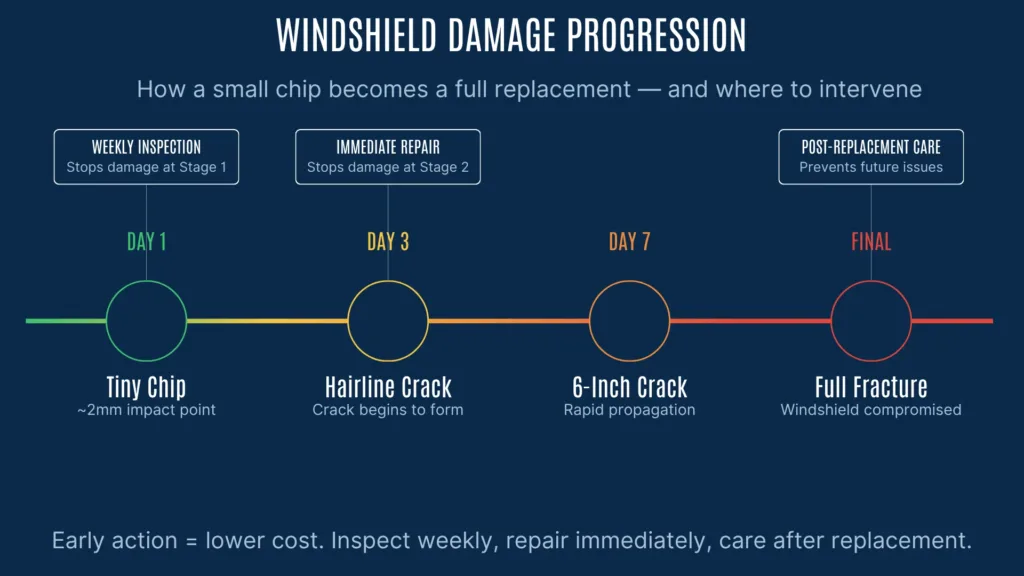
Picture this: A single tiny chip from a highway pebble can spread into a foot-long crack overnight, just from a frosty morning.
Safety First: Why Integrity Matters
A compromised windshield reduces your vehicle’s ability to protect you. Studies show over 70% of a car’s structural strength during rollovers is tied to the windshield.
Damage can lead to:
- Distorted driver vision—especially dangerous at night or in the rain.
- Interference with safety systems like automatic emergency braking or lane-keeping cameras, which rely on clear, undistorted glass.
Remember: A clear, undamaged windshield isn’t just about what you see—it’s about your safety every mile.
Vigilance pays off. Regular auto glass checks and prompt attention to damage help secure your vehicle’s structural strength, keeping every drive safe and stress-free.
Core Preventive Maintenance Practices
Routine Inspection Protocols
Staying ahead of auto glass damage starts with regular visual inspections.
- For personal vehicles: perform quick weekly windshield and window checks.
- For fleets: schedule thorough monthly or quarterly reviews, depending on use.
Picture this: you spot a tiny chip or crack before it becomes a headache. What you’re looking for:
- chips or “star breaks”
- cracks (especially along the edges)
- surface distortion in your line of sight
- any new edge fractures
These quick checks—just 2 minutes, once a week—help prevent small issues from spiraling into costly replacements.
—
Immediate Response to Damage: Repair vs. Replacement
Not every chip requires replacement, but waiting is never the answer.
- If a crack is smaller than a credit card and outside your main view, a repair is usually safe.
- Damage in the driver’s line of sight, near the edge, or deeper than 1/8 inch? Go straight to replacement.
Delaying repairs increases risk: 70% of untreated chips expand into full cracks. Trust only certified technicians and follow OEM safety standards to guarantee lasting, safe repair.
“A chip today can mean a full replacement tomorrow—act fast for safety and savings.”
—
Cleaning and Glass Care Best Practices
Clean glass does more than look good—it keeps you safe.
- Use only ammonia-free, tint-safe glass cleaner for every surface.
- Grab a clean microfiber towel to avoid scratches and streaks.
- Clean both the inside and outside; interior buildup can cause dangerous glare.
Commit to monthly deep cleans, and inspect for hidden damage each session. Regular cleaning ensures clear sightlines and early problem detection.
—
Windshield Wiper and Washer System Maintenance
Faulty wipers can ruin a windshield long before a rock does.
- Inspect blades for streaks, noise, or visible cracks—replace them at least every 6-12 months.
- Keep the washer fluid topped off and test spray patterns monthly.
A simple monthly checklist: inspect, clean, top off, repeat. “Don’t let worn wipers destroy what glass debris couldn’t.”
—
Environmental Protection Strategies
Where you park and drive directly impacts your windshield’s lifespan.
- Avoid parking under trees (falling branches), near construction (flying debris), and in direct sun after storms.
- Use sunshades and avoid blasting defrost or air conditioning on extreme-hot or -cold days.
For fleet owners, these strategies reduce downtime and repair costs after harsh weather or tough routes.
—
Building these core habits means you’ll spend less on repairs, drive safer, and extend your glass’s lifespan for years—because a clear view today keeps you safe tomorrow.
Fleet and Commercial Vehicle Preventive Programs
Structured Maintenance Policies and Procedures
A professional fleet glass program starts with clear, written policies built around safety and cost-efficiency.
Picture this: Your drivers each week complete a windshield and window check—part of a checklist as routine as an oil change.
- Define inspection frequency: Weekly for most vehicles, monthly or quarterly for lower-use assets.
- Set clear reporting protocols: Who checks, who reports, and what gets documented.
- Vendor selection: List only approved, certified auto glass specialists to maintain safety.
- Tie into existing maintenance: Integrate checks with scheduled tire rotations or oil changes for efficiency.
- Document everything: Standard operating procedures (SOPs) build consistency and allow trends to be tracked over time.
Quotable moment: “A single fleet-wide policy can prevent dozens of unexpected repairs, saving time and money every month.”
Leveraging Technology and Reporting Tools
Digital tools make preventive care easier. Today’s top fleets use mobile inspection forms, telematics systems, and automated reminders to make compliance seamless.
- Track everything: Date, damage type, location—digitally.
- Spot trends fast: Recurring cracks on a specific route or vehicle type? Digital logs reveal the story.
- Boost accountability: Instant reporting means problems aren’t forgotten or delayed.
- Automated reminders: Keep maintenance on everyone’s radar—perfect for busy supervisors.
“Imagine seeing your entire fleet’s glass health on a dashboard—no paperwork, just instant insight.”
Training for Drivers and Staff
Empower your team with short, practical training.
- Teach visual inspection basics: Chips, cracks, and even light distortion.
- Reinforce urgency: Demonstrate how a chip left unchecked can turn into costly downtime.
- Ongoing education: Regular updates on cleaning techniques, wiper care, and calibration for ADAS-supported windshields.
- Build a safety-first mindset: Use real-world examples—like how fast a star break can grow on a work truck after a bumpy highway run.
This doesn’t just protect your assets—it builds a culture where everyone looks out for the vehicle’s reliability and each other’s safety.
Regular, documented inspections, paired with smart digital tools and well-trained staff, will keep your fleet running safely and save real dollars in 2026. When every driver knows what to look for, small problems get fixed before they turn into expensive crises.
Post-Replacement and Advanced System Considerations
Ensuring Proper Post-Installation Care
Manufacturers set specific adhesive curing times—often 24 to 48 hours—before typical driving, washing, or jostling, to guarantee a secure bond.
Avoid:
- Car washes (especially automatic) for at least the first 24 hours
- Aggressive driving on rough roads until adhesives are fully cured
- Slamming doors, which can disrupt the delicate adhesive seal
Picture this: You drive off minutes after a windshield install, hit a pothole, and suddenly notice wind noise or leaks—all because post-care protocols weren’t followed.
Monitoring After Replacement
Stay alert for early signs that something’s wrong:
- Leaks around the edges after rain
- Whistling wind noise at highway speeds
- Wipers not operating smoothly or missing sections of the glass
- ADAS system errors or unusual warning lights
A certified technician should check the site, especially if ADAS recalibration was part of the service. Always ask for a final system scan report—transparency is crucial.
Advanced Driver Assistance Systems (ADAS) and Modern Windshields
Today’s windshields do more than block the wind: over 60% of new vehicles in 2025 include ADAS features integrated into the glass.
- Lane departure and collision avoidance cameras are often mounted on or behind your windshield
- Any change in windshield position—even tiny misalignments—can knock these systems out of calibration
That’s why professional calibration after replacement is required not just for new cars, but for many commercial fleets and insurance customers, too.
ADAS-Specific Responsibilities
If you manage a fleet or own a late-model car, your responsibilities include:
- Ensuring calibration after every glass replacement
- Choosing service vendors trained specifically for ADAS systems (look for certifications—don’t compromise for speed or savings)
- Documenting all post-install inspections and calibrations for compliance and warranty reasons
Failing to calibrate can mean auto-braking or lane-keeping won’t work when you need them most—a risk no business or driver should take.
Trusting certified experts and respecting recommended post-care timeframes keeps your vision clear, your systems safe, and your passengers protected.
Knowing these high-standard steps makes you part of the safest drivers on the road—because in the world of auto glass, expert care today guarantees safety tomorrow.
Actionable 2026 Maintenance Checklist
Weekly, Monthly, and Event-Triggered Tasks
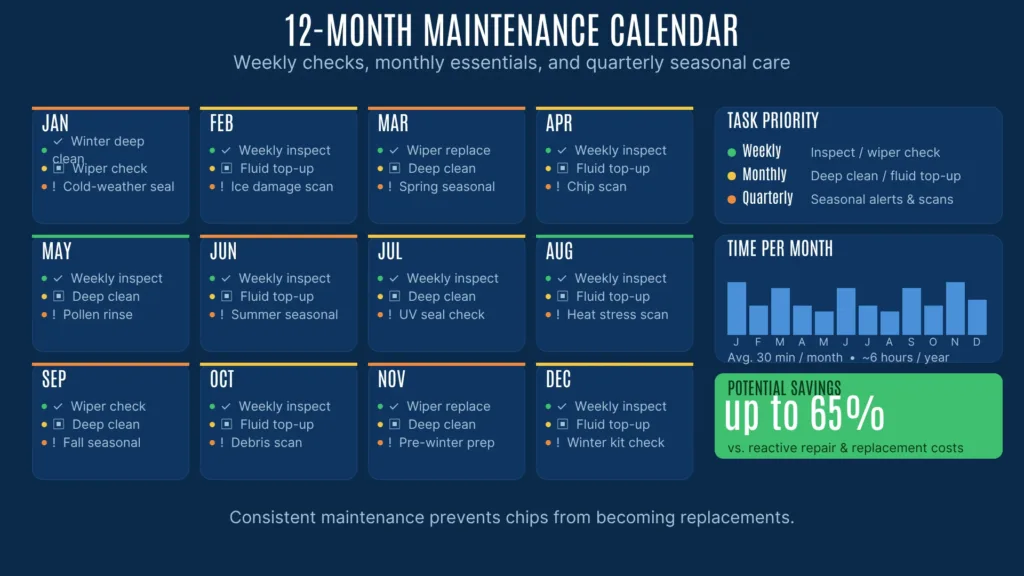
Keeping your auto glass in top shape is all about consistency and detail—small steps each week add up to years of clear, safe driving. Imagine giving your windshield the attention you’d expect for a pilot’s cockpit: a few extra minutes brings major peace of mind.
Here’s your 2026 checklist, built for busy drivers and fleet supervisors:
—
Weekly Must-Do’s
- Visually inspect windshields, windows, and sunroofs for chips, cracks, and scratches.
- Check wiper blades for any streaking, squeaking, or visible wear.
- Spot-test washer fluid spray to ensure even coverage.
“Five minutes today can prevent a $500 replacement tomorrow.”
—
Monthly Essentials
- Deep clean both outside and inside glass using ammonia-free, tint-safe cleaner and microfiber towels.
- Wipe down wiper blades—including the edges—removing grit and buildup.
- Inspect all window seals for signs of leaks or weather damage.
- Top up washer fluid and verify the washer system’s spray pattern.
- Log all inspections and maintenance tasks in a simple notebook or digital app—fleets see up to a 30% drop in unexpected repairs with regular tracking.
—
After Impact, Severe Weather, or Replacement
- Perform a detailed visual check after hail, gravel-road drives, or debris impacts.
- Following storms, look for new chips, star breaks, or edge cracks—these often spread if ignored.
- After glass replacement, follow installer advice: avoid car washes and rough roads for 24-48 hours, and check for leaks, wind noise, or ADAS warnings.
“When in doubt, check it out—the simplest inspection can be your best safety tool.”
—
Habit-Building and Best Practices
- Set automated calendar reminders or use maintenance apps to keep these checks on schedule.
- Teach all drivers—personal or commercial—to identify early signs of glass damage.
- Fleet managers: connect auto glass checks to oil changes and tire rotations to make glass care routine.
—
Safety starts with prevention—regular inspection and rapid response keep you protected and minimize costs. Make these habits part of your driving routine, and you’ll support safer roads, lower repair bills, and that crystal-clear peace of mind every driver deserves.
Your Roadmap to Preventive Measures for Auto Glass Excellence
Keeping your auto glass in peak condition isn’t just about looks—it’s a non-negotiable part of keeping yourself, your passengers, and every mile you drive safe. A proactive approach means less hassle, less expense, and real peace of mind on the road. Your clear vision is key to secure, confident driving.
By investing just a few minutes each week, you can dramatically lower your risk of unexpected replacements or safety system issues. Here’s what matters most:
- Inspect and clean your auto glass weekly—catch issues before they become problems
- Tackle chips and cracks right away—fast action always beats costly repair
- Follow post-replacement care protocols closely—these steps protect your investment and ensure long-term safety
- Integrate auto glass checks with other vehicle maintenance—tie inspections to oil changes for a seamless routine
- If you manage a fleet, empower your drivers with simple training and digital reporting tools for consistent, worry-free results
Take the first step today: set a reminder for your next glass inspection and share this checklist with your team or family. Staying ahead doesn’t require expert knowledge—just simple, steady attention and a commitment to doing things right.
Remember, every clear windshield is your shield against the unexpected—and a testament to your care and responsibility behind the wheel. “Clear vision, safe driving—your journey begins with glass you can trust.”
Stay vigilant. You’ll see—and feel—the difference every day.
FAQ
1. What are the key preventive measures for auto glass that drivers should follow?
The most effective preventive measures for auto glass include weekly visual inspections for chips and cracks, using ammonia-free cleaners, replacing wiper blades every 6–12 months, and avoiding parking under trees or in harsh sunlight. These simple habits catch damage early and extend your glass lifespan by years.
2. How often should I perform preventive measures for auto glass inspections?
Perform quick visual inspections weekly—just 2 minutes of checking for chips, cracks, or distortion. Fleet managers should schedule monthly or quarterly preventive measures for auto glass reviews depending on vehicle usage. Monthly deep cleaning and wiper maintenance are essential preventive measures for auto glass care.
3. Why is fast action critical when implementing preventive measures for auto glass after damage is spotted?
Studies show 70% of untreated chips expand into full cracks within days, requiring costly replacement. Implementing preventive measures for auto glass means addressing damage immediately—chips smaller than a credit card can often be repaired if caught early, saving hundreds in replacement costs.
4. What role does ADAS calibration play in preventive measures for auto glass after replacement?
Over 60% of new vehicles include ADAS features integrated into the windshield. Preventive measures for auto glass must include professional ADAS calibration after replacement to ensure lane-keeping and collision avoidance systems function properly—a critical safety requirement.
5. How can fleet managers implement a preventive measures for auto glass program?
Establish written policies defining weekly inspection frequency, use digital reporting tools to track damage and trends, train drivers on spotting early warning signs, and partner only with certified technicians. Fleet-wide preventive measures for auto glass reduce unexpected repairs by up to 30% annually.
Thank you for choosing Discount Auto Glass. Fast, reliable service with a lifetime guarantee. Visit us or enjoy our mobile service.