
July 8, 2026
Windshield Replacement Services: What to Expect in 2026
In 2026, windshield replacement means far more than swapping out broken glass—it’s about precision, technology, and unwavering safety. Here’s what drivers, fleet managers, and insurers need to know to stay safe, compliant, and confident on the road ahead.
- Modern windshields are tech ecosystems, integrating ADAS cameras, HUD/AR displays, and smart sensors—meaning quality installation and calibration are now essential for safety.
- Specialized training and advanced tools are non-negotiable; choose providers like Discount Auto Glass that offer certified technicians, digital assessments, and transparent documentation.
- Immediate replacement is critical for cracks over 6 inches, damage near sensors, or any issue impairing driver visibility or ADAS functions—delaying repairs risks both safety and insurance coverage.
- 2026 glass innovations—from Gorilla Glass to hydrophobic and nanotech coatings—offer superior durability, clarity, and weather resistance, but demand careful handling and correct installation.
- Precise ADAS calibration after replacement is required by law and best practice; always ask for calibration reports and safety compliance certificates for total peace of mind.
- Cost ranges now reflect advanced features: Expect $250–$400 for standard glass, but $900–$1,800+ for vehicles with ADAS or HUD, including calibration and premium parts.
- Sustainability counts: Top providers embrace recycled glass, low-VOC adhesives, and responsible disposal—ask for eco-friendly options and proof of green practices.
- Your provider matters: Prioritize companies with OEM-specific training, in-house calibration, and full transparency—protecting your investment, safety, and long-term satisfaction.
Stay ahead by choosing certified, transparent, and eco-friendly experts for your next windshield replacement—your safety and peace of mind deserve nothing less. For the full story and smart strategies, explore the article in detail.
Why Your Windshield Replacement Service Choice Matters More Than Ever
Imagine driving a vehicle where your windshield does more than keep out the rain—it actively protects you with embedded sensors, high-performance glass, and digital displays guiding every mile.
By 2026, a simple crack is no longer just a cosmetic issue. It can disrupt lane assist systems, blur navigation projections, or compromise the technology that now defines safe driving. For many drivers (and fleet owners), having the right provider isn’t just about quick service—it’s about trust, transparency, and staying ahead of fast-moving innovations.
Choosing a windshield replacement isn’t just checking a box—it’s a decision that safeguards your:
- Personal safety (modern glass is engineered to support collision avoidance and advanced driver-assistance systems)
- Investment in your vehicle (cutting-edge windshields require precision calibration and OEM-quality parts)
- Peace of mind (reputable providers document every step and ensure your systems are fully restored)
With the industry projected to reach $8.9 billion in the U.S. alone by 2026, demand is rising for service that matches new technology—from rain-repelling coatings to HUD-enabled AR glass.
This guide will help you understand:
- Why today’s windshield replacements are about so much more than “just glass”
- The crucial components and certifications you should demand
- How leading providers like Discount Auto Glass deliver safety, quality, and reassurance—every step of the way
Ready to see what the future of safe driving actually looks like? Let’s explore how the 2026 windshield goes from simple pane to essential safety platform, and what these changes mean for you, your passengers, and the road ahead.
Understanding the Windshield Replacement Landscape in 2026
In 2026, the world of windshield replacement is undergoing a fast-paced transformation—less about “just glass,” and more about advanced electronics, smart sensors, and precision calibration.
Picture this: what once was a simple swap now means handling sophisticated ADAS (advanced driver-assistance systems), embedded tech, and high-performance glass that’s integral to your car’s safety and data systems.
The windshields of 2026 are as much about digital visibility and collision avoidance as they are about shelter from the elements.

Rising Demand and Market Growth
- The global windshield replacement services market will surge toward a projected $19.8 billion by 2034, with steady 6.3% yearly growth.
- In the U.S. alone, the segment hits about $8.9 billion in 2026 and is on track for continued expansion—driven by more vehicles, rising accident rates, and rapid tech upgrades.
- Simple glass swaps are giving way to higher-value jobs focused on EVs, AR/HUD windshields, and smart sensor integration.
Every new model-year brings a rising share of vehicles where “windshield” means data hub, safety shield, and tech platform in one.
Complexity: From Glass Pane to Tech Ecosystem
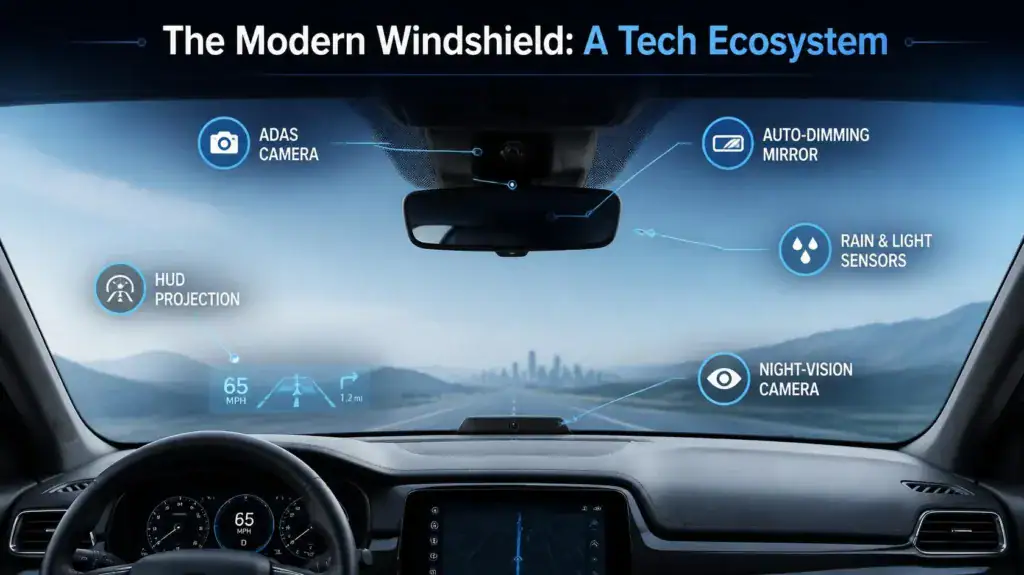
The modern windshield isn’t just a piece of glass—it’s:
- The critical platform for lane departure cameras and radar.
- The display for heads-up navigation and augmented reality.
- The mounting zone for rain sensors, night vision, and auto-dimming mirrors.
- An engineered, layered component using:
- Gorilla Glass or ion-exchange strengthened laminate for lighter, tougher panels.
- Hydrophobic and nanotech coatings that self-heal or repel moisture.
- Specialized fitments for EVs and autonomous-ready vehicles.
Windshield replacement providers require specialized training, advanced tools, and access to precision software—not just a glass cutter and some sealant.
What This Means for Customers and Fleet Owners
Here’s what to expect in practice:
- Proper replacement now requires ADAS calibration, glass matching, and certified expertise.
- Basic “universal” glass is disappearing—OEM spec and premium aftermarket windshields are standard for ADAS, EVs, or HUD systems.
- Leading service providers, like Discount Auto Glass, invest in rigorous safety, transparent documentation, and up-to-date technician training.
“The windshield is now your first line of digital defense,” is a message cars—and smart service providers—send at every replacement.
Drivers in 2026 should look for providers equipped to handle both the tech complexity and safety-critical standards of modern vehicles. Your next windshield job isn’t just about restoring a view—it’s restoring full-function safety for the road ahead.
Key Signs Your Windshield Needs Replacement
A damaged windshield can quickly shift from minor annoyance to a serious safety hazard—especially with today’s smart vehicles.
If you notice damage, understanding when to repair and when to replace is critical for your safety, legal compliance, and vehicle performance.
Top Safety-Related Replacement Triggers
Certain types of damage require immediate replacement rather than repair, especially in 2026 when windshields often act as sensor platforms for ADAS or HUD systems.
Look for these signs you need replacement, not repair:
- Cracks longer than 6 inches
- Multiple chips (especially grouped or in the driver’s line of sight)
- Cracks or chips that reach the windshield’s edge (which compromise structural strength)
- Delamination or “fogging” between layers
- Impact damage directly in front of ADAS cameras or HUD zones
- Structural compromise due to previous, improper repairs
Picture this: It’s a rainy morning, and a crack near your ADAS camera suddenly spreads—now your lane assist and emergency braking might be blind.
Understanding the Urgency—and the Risks
Not all damage is created equal, but waiting can quickly escalate costs and safety risks.
- Small chips away from electronics may allow for repair, but anything distorting the driver’s vision, affecting wiper sweep, or near sensor zones often means a full replacement.
- Vehicles with sensors or HUD features are at higher risk: Even tiny distortions or misalignment can cause false alarms, missed lane warnings, or inaccurate projections.
- Legal penalties for driving with obstructed or poorly aligned windshield technology have increased—many states require immediate service for compromised ADAS areas.
Anecdotal data: The average cost of replacing a windshield with ADAS in 2026 is up to $1,200, but failing to replace promptly can lead to insurance claim denial or vehicle downtime.
When Modern Features Demand Replacement
Advanced systems like HUD or AR displays make glass quality and clarity non-negotiable.
- A chip near a HUD projection area can cause ghosting or unreadable navigation displays.
- For AR windshields, even minor distortions can confuse lane guidance—jeopardizing safety tech and possibly voiding manufacturer warranties.
- Insurance and fleet contracts increasingly require documented, professional replacement for ADAS-equipped vehicles.
Picture a scenario: Your windshield crack creeps toward the embedded night vision camera—suddenly, your premium safety feature could be blocked at the exact moment you need it most.
What To Do Next
If you spot any of these warning signs, schedule a professional assessment immediately—especially if driving a 2026 model with ADAS, HUD, or smart glass.
Remember: When safety is on the line, “good enough” is never enough. Prompt attention to windshield damage keeps your vision clear, your systems reliable, and your vehicle legally compliant.
Advances in Windshield Materials and Smart Technologies
Modern Glass Types and Treatments
Today’s windshields are a far cry from the basic laminated glass of the past. In 2026, impact-resistant and chemically strengthened glass dominate, offering improved shatter protection and enhancing crash safety.
Drivers will encounter innovations such as:
- Gorilla Glass—adapted from smartphone screens for high strength with less weight, benefiting fuel efficiency in EVs and hybrids
- Lightweight laminated structures, designed for better range and cabin noise reduction
- Hydrophobic coatings that actively repel water and dirt, keeping your windshield clearer in tough weather
- Nanotechnology scratch-resistant coatings, helping glass surfaces last longer and look new
- Self-healing glass (in niche, high-end vehicles), which can “erase” minor chips and cracks automatically
These enhancements drive long-term durability—but require special primers, resins, and curing times during installation. A visual: picture a clear, rain-shedding windshield on a stormy day, or an EV driver noticing a quieter ride after a lighter glass swap.
“Modern windshields work harder so you can drive safer and smarter—replacement quality is more vital than ever.”
Embedded Electronics and Sensor Integration
Your windshield is now a high-tech platform, not just a barrier. Advanced vehicles use the glass as a mount for:
- ADAS cameras anchoring lane-keeping, emergency braking, and collision avoidance features
- Rain and light sensors, night-vision cameras, and camera brackets that are integrated right into the glass
- HUD (heads-up display) units that project navigation and alerts onto special windshield layers
- AR display zones in select new models, overlaying real-time data directly in the driver’s line of sight
This technology makes the material’s transparency and optical clarity absolutely critical—one small scratch or misalignment could disrupt your ADAS or HUD display.
For every replacement, shops must:
- Precisely match OEM part numbers and glass specs
- Verify electrical connectors, optical coatings, and sensor windows
- Use trained technicians with equipment for recalibration
“In 2026, your windshield isn’t just glass—it’s the eyes and awareness of your vehicle.”
What This Means for Customers and Service Providers
Expect fewer generic replacements and more focus on exact matches for smart features. Only certified professionals can guarantee full functionality and safety, especially for ADAS, HUD, and AR systems.
Look for providers who:
- Highlight training on advanced materials
- Offer in-house calibration and digital reporting
- Use quality, manufacturer-approved adhesives and parts
When choosing a 2026 windshield service, prioritize safety, certification, and proven expertise to keep every drive as secure and high-tech as today’s vehicles demand.
The Windshield Replacement Process in 2026
End-to-End Replacement Workflow
Replacing a windshield in 2026 is a precise, technology-forward process designed for safety, efficiency, and compliance.
Every job now begins with a comprehensive digital damage assessment, not just a quick visual check. Technicians evaluate:
- The extent of cracks, chips, or ADAS/HUD/AR zone damage
- Sensor locations, glass type, and embedded technology
Next, your vehicle is prepped securely, protecting paint and interiors from debris or adhesives. The original glass is carefully removed, using specialized tools to avoid sensor wiring or smart-layer damage.
Before installation, the team verifies that your replacement glass matches every tech spec:
- Correct P/N for ADAS (Advanced Driver Assistance Systems)
- HUD/AR display compatibility
- Built-in sensors or antenna provisions
Modern adhesives—precision-applied—maximize crash performance and weatherproofing. Documentation happens at each step, supporting insurance claims and warranty assurance.
Picture this: Every step in the workflow is tracked by digital checklists, with technicians capturing photos and calibration logs, creating a verifiable record for your peace of mind.
ADAS/Advanced Electronics Calibration
Today’s windshield is a platform for cameras and sensors powering essential driving features. After glass replacement, ADAS calibration is not optional—it’s a requirement.
Calibration ensures that:
- Lane-keeping, emergency braking, and adaptive cruise sensors function perfectly
- Sensors “see” the real world through the new glass with precision
There are two main calibration types:
- Static calibration – Performed in-shop with targets and lasers, essential for many luxury and EV models
- Dynamic calibration – Done on the road, using live vehicle data during specific driving conditions
Shops must invest in:
- ADAS calibration tools, OEM-compliant software, and ongoing technician training
- Digital reporting to document each test and adjustment
A “good enough” alignment simply doesn’t cut it—safety depends on millimeter accuracy.
Quotable insight: “In 2026, the right glass is only the start—calibration is what keeps your ADAS lifesaving, not just blinking.”
Quality Control and Safety Assurance
Regulations now require robust post-installation safety tests—not only for visibility and fit but for electronic system performance.
Best-practice shops provide:
- Glass and adhesive batch tracking
- Calibration certification and system scan reports
Strict protocols protect both vehicle occupants and the shop, reducing post-repair liability. With Discount Auto Glass, you benefit from industry-leading quality control, transparent documentation, and a team known for safety-first service.
Scenario for social/video: Imagine leaving the shop with an app notification confirming your installation passed every safety and calibration test—confidence in every mile ahead.
Want a quick checklist? Always request:
- Proof of calibration
- Safety compliance certificate
- Warranty documentation
Key takeaway: In 2026, advanced windshields demand advanced care—expect comprehensive electronic testing, meticulous installation records, and a level of technical skill that puts your safety first, every single time.
Cost, Timeframe, and What Customers Should Expect
| Glass Type | Price Range | Calibration Included | Typical Vehicle Type |
|---|---|---|---|
| Standard Aftermarket Glass | $250–$400 | Not required | Older/base models without ADAS |
| OEM Branded Glass | $400–$650 | Not required | Standard vehicles without sensors |
| Premium ADAS/HUD/AR Glass (OEM only) | $900–$1,800+ | Included (static or dynamic) | Late-model vehicles with ADAS, HUD, or AR features |
| Example: 2026 Subaru w/ ADAS | $1,200–$1,600 | Included | ADAS-equipped Subaru models |
2026 Cost Drivers and Price Ranges
Expect windshield replacement costs to reflect not just the glass, but the technology supporting your vehicle’s safety.
Several key factors shape the price:
- Type of glass: Standard laminated vs. advanced Gorilla Glass, HUD/AR-enabled, or lightweight compositions
- Integrated technology: ADAS sensors, rain/light detection, or AR/HUD features all increase complexity
- Calibration requirements: ADAS-equipped vehicles need precise recalibration every time
- Shop expertise: Certified technicians and OEM approvals may add to your investment—but deliver long-term safety
Current U.S. price benchmarks (2026):
- Basic replacement (no electronics): $250–$400 (aftermarket), $400–$650 (OEM branded)
- Premium/advanced vehicles (ADAS/HUD/AR): $900–$1,800+ (OEM only, often with calibration included)
- Example: Some 2026 Subaru owners report $1,200–$1,600 total with necessary ADAS calibration
“Owning a high‑tech vehicle means your windshield may be the most advanced glass you’ll ever own—and the most important for your safety.”
Timeframes and Service Scheduling
The time needed for a full replacement can range widely depending on:
- Parts availability: Some advanced windshields are only available as OEM, creating 3–10+ day lead times
- Complexity of replacement: Standard swaps take 1–2 hours, while ADAS/HUD jobs often require 3–5 hours (including calibration)
- Calibration and testing: Static or dynamic ADAS calibration is essential and may extend same-day service to a multi-day process
- Service model: Mobile replacement is widely available and may speed up scheduling, especially through digital platforms
“Picture this: Your calendar fills up, but with mobile services and digital booking, you get expert glass replacement—at your office parking lot.”
Insurance, Warranties, and Documentation
After a replacement, request clear documentation—this is now standard for reputable providers:
- Insurance claims: Most comprehensive auto policies cover replacement (minus deductible); providers will guide you through the claims process
- Warranties: Confirm that your service includes written warranties on both the glass and installation labor
- Proof of calibration: Demand a completed calibration report with sensor/system status—this matters both for safety and possible insurance disputes
- Compliance records: Ask for adhesive lot numbers and regulatory safety checklists, especially for fleet vehicles and ADAS-equipped cars
“To drive with full confidence, proof-of-calibration is just as essential as proof-of-insurance.”
When scheduling windshield replacement in 2026, be ready for higher precision, tech-powered service, and transparent paperwork—these are your protections for safe, hassle-free driving. Always ask for warranties and calibration documentation to ensure every layer of your new windshield meets the highest standards for safety and long-term value.
How to Choose the Right Windshield Replacement Provider
Credentials, Certifications, and Training
Selecting the right provider means protecting your safety and your investment. In 2026, windshields are complex systems, not just glass.
Look for these qualifications to ensure your job gets done right:
- ADAS calibration certifications (proven expertise calibrating camera and sensor systems)
- OEM-specific training for your make and model—especially crucial for AR/HUD-equipped or EV vehicles
- Ongoing technician education (providers should regularly update staff on technology, materials, and protocols)
When you see a provider with advanced certifications, it means their technicians understand both the latest glass types and the sensitive electronics now embedded in most modern vehicles.
Find peace of mind knowing, “Certified technicians don’t just install glass—they restore your car’s most critical safety features.”
Service Offerings and Technological Capability
Traditional shops primarily swap glass. Today’s leaders stand apart by offering full-system replacements, including digital workflows and on-site calibration.
When comparing providers, ask if they provide:
- In-house or mobile ADAS calibration with real-time system checks
- Factory-specific glass for HUD, AR, or smart features (not just “fits all” parts)
- Digital portals for quotes, scheduling, and documentation
“The best modern auto glass services offer not just speed, but integrated technology from booking to post-installation calibration.”
Picture this: your replacement shouldn’t just look like new—it should guarantee your collision-avoidance, lane-keeping, and all safety systems are road-ready within hours.
Transparency, Customer Focus, and Safety
In 2026, reliable providers guarantee clear communication and total transparency every step of the way.
Best practices you should expect include:
- Upfront, itemized quotes breaking down parts, labor, calibration, and timelines
- Verified sourcing on all glass and adhesives, including documentation for warranty and insurance claims
- Clear handoff of calibration compliance records and safety test results post-install
At Discount Auto Glass, you’ll experience the difference—integrity, detailed documentation, and a customer-first approach are the norm. Expect “no surprises, no shortcuts—just expert care that puts your safety first, every time.”
For today’s drivers, the right choice is simple: pick a provider with certified staff, advanced technology, and an uncompromising commitment to safety and transparency—so every drive is as clear and secure as possible.
Sustainability and Responsible Replacement Practices
Eco-Friendly Materials and Manufacturing
The windshield replacement industry is moving swiftly towards eco-friendly materials and responsible manufacturing. In 2026, it’s common to see providers spotlighting:
- Recycled glass: Many new windshields now contain recycled content, aligning with growing regulations and fleet mandates.
- Low-VOC adhesives: Modern adhesives are engineered to minimize harmful emissions without sacrificing bond strength or safety.
- Lower-carbon production: Manufacturers are investing in processes that reduce carbon emissions, using advanced furnace tech and optimized shipping routes.
This shift means customers can expect shops to explain, at the quote stage, whether your replacement glass or adhesives meet green certification standards.
Environmental Reporting and Responsible Disposal
Shops that put responsibility first are going beyond basic recycling and actively minimizing waste across their operations.
Look for providers who:
- Recycle every removed windshield rather than sending it to landfill.
- Partner with specialized facilities to reclaim PVB layers and metal trim.
- Use digital documentation to prove responsible disposal and support insurer/fleet environmental goals.
Large networks may publish annual sustainability reports, offering a transparent look at recycling rates, carbon offsets, and renewable material adoption.
Evaluating a Provider’s Green Credentials
Picture this: you’re comparing two shops. One tells you exactly where your old glass will go and hands you a disposal certificate. The other stays vague.
Always ask:
- Do you recycle 100% of glass removed?
- Can you provide proof of responsible disposal or processing?
- What percentage of your new glass is recycled content?
- Are adhesives and solvents rated low-VOC or eco-friendly?
Making Sustainable Choices in 2026
“Your windshield replacement doesn’t have to cost the earth—ask for recycled glass and low-carbon options when you book.”
More fleets and drivers are demanding proof of green practices, and top providers lead the way with clear, documented sustainability.
The key takeaway: In 2026, responsible replacement is about more than a safe, clean install—it’s a commitment to both road safety and environmental stewardship. You have the power to choose a provider who makes both a priority.
Looking Ahead: The Future of Windshield Replacement
The future of windshield replacement in 2026 is defined by rapid innovation, rising safety standards, and vehicles packed with smart glass and electronics. For drivers, fleet operators, and insurers, staying current is now a necessity, not a luxury.
By 2026, augmented reality (AR) windshields and fully autonomous vehicles are moving from concept to reality. Picture this: your next windshield projects real-time navigation or hazard alerts directly onto the glass—no head-turns required.
AR, Autonomy, and Regulatory Demands
- AR systems are already piloted in premium models, with display-capable windshields expected in more vehicles every year. Providers must match the correct glass, coatings, and electronics—cutting corners isn’t an option.
- Fully autonomous vehicles require seamless integration between the windshield and onboard cameras, lidar, and sensor arrays. Even minor installation errors can compromise a vehicle’s safety and compliance.
- Regulatory changes demand enhanced documentation: calibration reports, batch tracking of adhesives, and proof of environmental responsibility are becoming standard.
“A windshield in 2026 is no longer just glass; it’s an active safety and data interface.”
Discount Auto Glass: Investing in Tomorrow
To stay at the forefront, Discount Auto Glass is investing in:
- Advanced technician training for AR, ADAS, and EV/autonomous windshields
- Digital workflow systems for real-time scheduling, transparent updates, and calibration documentation
- Green solutions using recycled glass, low-carbon adhesives, and energy-efficient fleet practices
- State-of-the-art calibration equipment—ensuring every replacement meets both OEM and regulatory standards
“Our customers should expect the safest install and the clearest vision, every single time.”
What This Means for You
- More mobile, on-site replacements—including calibration—will become the norm
- Tech-driven quoting and scheduling, with live status updates, keeps you informed every step
- Providers like Discount Auto Glass will set the pace for eco-friendly, transparent service and absolute peace of mind
“Your vehicle’s glass is part of a much bigger safety and technology ecosystem—choose a provider who treats it that way.”
As vehicles evolve, your expectations should too. Discount Auto Glass is ready to deliver safe, high-tech, and sustainable solutions for every driver seeking “Clear Vision, Safe Driving.”
Drive Forward with Confidence: Your Safety Starts Here
Choosing the right windshield replacement in 2026 is about far more than just restoring your view—it’s about ensuring the highest standards of safety, precision, and reliability for every drive. Today’s windshields are the gateway to advanced tech and optimal vehicle performance, making every replacement a critical investment in peace of mind.
You have the power to drive with total confidence—provided you work with providers who match the complexity of modern vehicles with expertise, transparent service, and a safety-first approach.
—
Here’s what you can do—right now—to safeguard your vehicle and your journey:
- Insist on certified expertise: Only trust shops that prove training in ADAS, HUD, and advanced calibration—your safety rides on technician skill.
- Demand full transparency: Request clear, itemized quotes, documentation of calibration, and evidence of eco-friendly disposal or recycled materials.
- Verify OEM glass & calibration reports: For vehicles with smart glass or embedded sensors, ensure you receive complete proof-of-calibration and warranty paperwork.
- Ask about sustainable practices: Choose providers committed to recycling, low-VOC adhesives, and responsible sourcing—protecting both your safety and the environment.
- Prioritize seamless digital service: Book with shops offering mobile replacement, real-time updates, and digital documentation for total convenience.
—
Take the next step:
- Schedule a professional assessment if you spot any windshield damage—don’t delay where safety is concerned.
- Compare providers based on their certifications, transparency, and sustainability commitments.
- Reach out to Discount Auto Glass for advice, digital quotes, or to experience our commitment to “Clear Vision, Safe Driving.”
—
The world of auto glass is evolving fast—but your expectations should evolve even faster. Choose uncompromising quality and expertise because your windshield is now your first and best line of defense on the road. Let every mile ahead be clear, safe, and empowered by the very best in modern vehicle care.
“The safest journey is one seen clearly—choose professionals who put your vision and safety first.”
FAQ
- How much does a windshield replacement service cost in 2026?
A standard windshield replacement service runs $250–$400, while ADAS or HUD-equipped vehicles typically cost $900–$1,800+, since calibration and OEM parts are included. - How long does a windshield replacement service take?
A basic windshield replacement service takes 1–2 hours, but jobs involving ADAS or HUD calibration often require 3–5 hours, and OEM parts availability can extend the timeline further. - Do I need ADAS calibration after a windshield replacement service?
Yes—any windshield replacement service involving ADAS-equipped vehicles requires static or dynamic calibration to ensure lane-keeping, braking, and camera systems function correctly. - Will my insurance cover a windshield replacement service?
Most comprehensive auto policies cover a windshield replacement service minus your deductible, but you should always request calibration proof to avoid claim disputes. - How do I choose the best windshield replacement service near me?
Look for a windshield replacement service offering certified technicians, in-house ADAS calibration, OEM-specific training, and transparent documentation like Discount Auto Glass provides.
Thank you for choosing Discount Auto Glass. Fast, reliable service with a lifetime guarantee. Visit us or enjoy our mobile service.