
October 29, 2025
Common Types of Auto Glass Damage and Solutions
Key Takeaways
Common Types of Auto Glass Damage and Solutions are crucial for drivers who want to maintain visibility, safety, and the structural integrity of their vehicles. Understanding Common Types of Auto Glass Damage and Solutions ensures you can act quickly to repair minor issues before they escalate into expensive replacements. Quick action, expert assessment, and preventive care are essential to keeping your windshield strong and your journeys safe. Here’s what you need to know:
- Early repair of chips and cracks prevents minor flaws from turning into costly, dangerous damage—chips smaller than a dime and cracks under 6 inches are often repairable if fixed quickly.
- Edge cracks and stress cracks pose a serious safety risk and almost always require immediate full windshield replacement to maintain your vehicle’s integrity.
- Professional assessment matters—only certified technicians use specialized tools and warranty-backed techniques to ensure repairs restore full strength and clarity.
- DIY kits are best for tiny, shallow chips, but most cracks, star breaks, or edge damage demand expert intervention to avoid hidden risks and guarantee safety.
- Timing is critical—contamination and temperature swings can worsen damage fast, so address auto glass issues as soon as you spot them to keep repair options open.
- Transparent pricing and strong warranties offer peace of mind—look for providers who clearly communicate costs and back their work with lifetime guarantees.
- Routine windshield inspections and gentle driving habits—like keeping distance from debris and parking in the shade—extend glass life and help catch issues early.
Stay proactive, trust professionals for honest advice, and prioritize prompt repairs to ensure clear vision and safe driving—every mile, every day. For a deeper dive into expert solutions and preventive tips, explore the full article.
Introduction
You’re cruising down the highway when suddenly—a sharp “ping!” A tiny chip appears on your windshield, barely noticeable, but you wonder, “Will this be a problem later?” For more than a third of drivers, that little chip turns into a spiderweb of cracks before the month is out, raising not just costs, but concerns for safety.
Your windshield does more than shield you from wind and rain—it’s critical for safe driving and your car’s structural integrity. Every small imperfection has the potential to grow, weakening the glass and putting you, your passengers, and your vehicle at risk.
Whether you’re a daily commuter, manage a fleet, or care for your dealership’s vehicles, knowing how to handle common auto glass damage isn’t just smart—it’s essential. Fast, informed action can mean the difference between a quick repair and costly replacement, not to mention ensuring you’re protected every mile.
Here’s what you’ll gain from reading further:
- Clear identification of the most common glass problems—from chips and cracks to complex breaks
- Expert-backed solutions that balance quality, safety, and efficiency
- Practical tips on when to repair, replace, or seek a professional opinion
- Insight on how to make confident, cost-effective choices without sacrificing reliability
Statistics show that over 15% of untreated auto glass damage can lead to major safety issues—sometimes in just a few days.
With this guide, you’ll see exactly how the pros assess each situation, why speedy solutions matter, and how a commitment to quality protects everyone on the road.
Ready to see how staying proactive can make your next drive safer, clearer, and worry-free?
Here’s what you need to know about the hidden risks, real-life solutions, and the best approach for every type of auto glass damage.
Understanding Auto Glass Damage: Foundations for Safety and Longevity
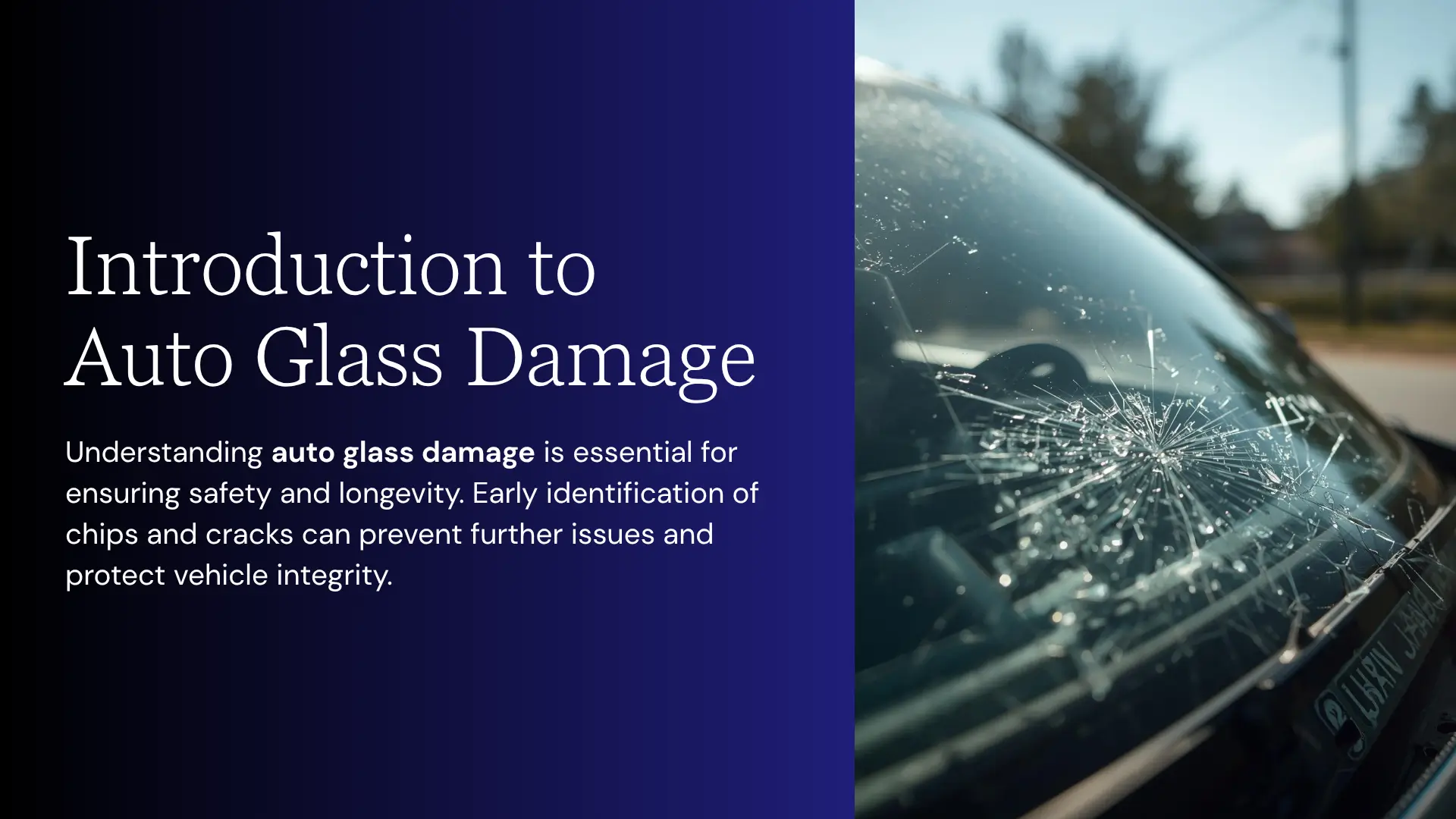
Identifying auto glass damage accurately is more than just a detail—it’s your first line of defense against visibility issues and costly repairs. Even a small chip or crack can weaken the entire windshield, affecting both driver safety and overall vehicle integrity.
If left untreated, minor flaws often turn into major safety hazards, impacting how well your windshield protects you in a crash or keeps out weather and debris. The National Highway Traffic Safety Administration highlights that over 15% of compromised auto glass leads to safety issues if not properly repaired.
Key Types of Auto Glass Damage
Knowing the difference between a harmless blemish and a repair-worthy flaw is essential. Here’s what you need to spot:
- Chip/Ding: A small area where glass has broken away, usually from flying rocks or debris—commonly less than a dime in size.
- Crack: A straight or curved line running through the glass, often longer than six inches if left unattended.
- Break: More severe than a chip; includes patterns like bull’s-eyes (circular), star breaks (radiating lines), or combination breaks.
- Shatter: Complete fragmentation, typically from high-impact accidents—demands immediate full replacement.
Picture this: a chip the size of an eraser can quickly become a network of cracks after a night of freezing temperatures or a sudden pothole impact.
Myths and Misconceptions: What Really Endangers Safety?
Let’s clear up a few myths:
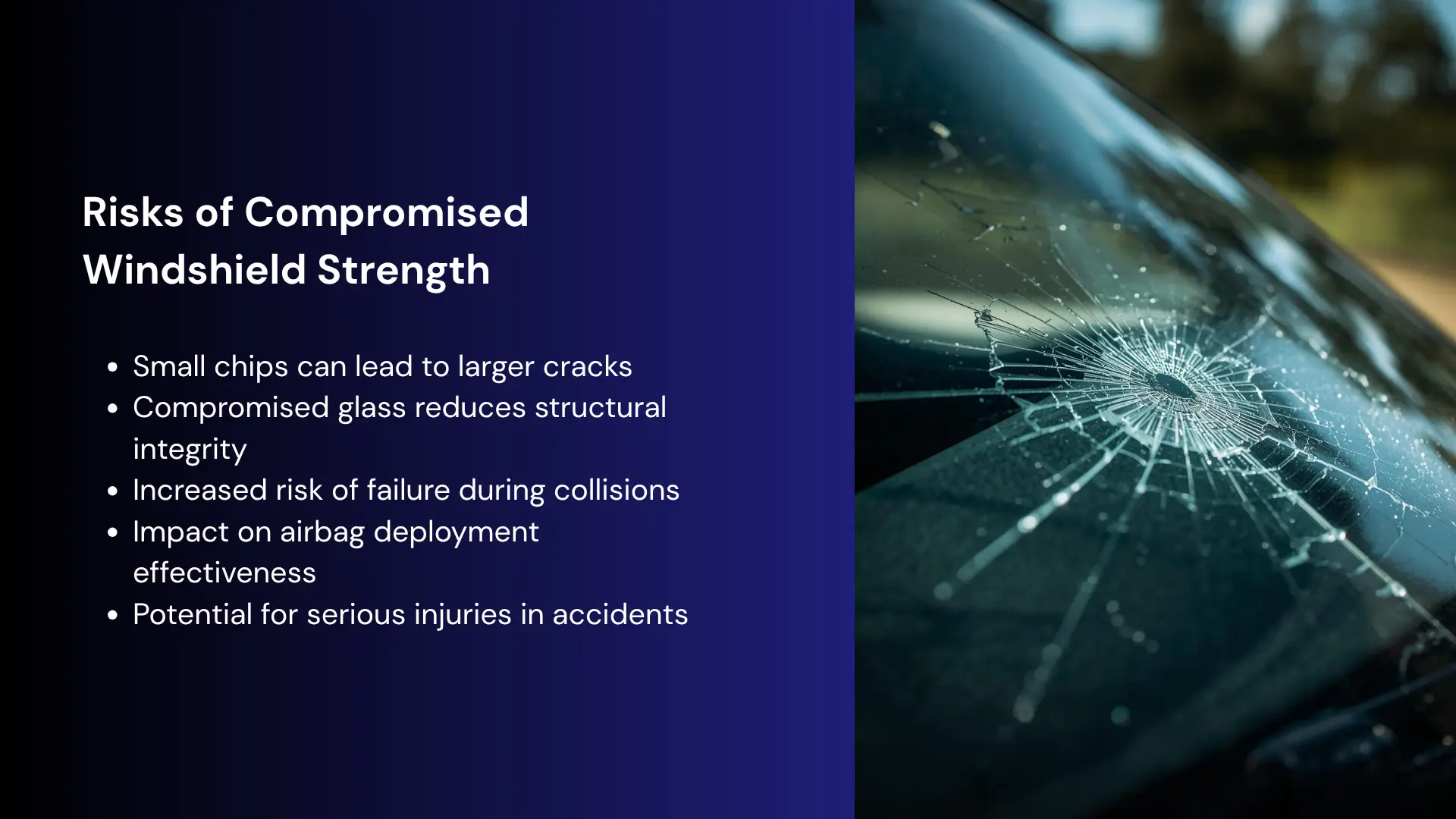
- “Small chips don’t matter.”—Wrong: Even surface damage reduces glass strength by up to 60%.
- “DIY kits solve everything.”—Only true for very minor damage; otherwise, they mask rather than fix the issue.
- “If the crack isn’t in the driver’s view, it’s safe.”—False: Cracks near the edge risk sudden windshield failure, regardless of location.
Why Professional Assessment Is Essential
Only a professional can judge if a blemish is truly minor, repairable, or requires immediate replacement.
Key reasons to seek expert evaluation:
- Specialized tools detect depth and hidden spreading.
- Warranty-backed repairs offer long-term peace of mind.
- Insurance may require documented, professional assessment for claim approval.
When it comes to auto glass, “one chip today can be one shattered windshield tomorrow.” Fast, expert assessment keeps your vision clear—and your drive safe.
Making safety your first priority means knowing what to watch for and trusting professionals to guide your next steps, because a clear windshield ensures a clear path forward.
Common Types of Auto Glass Damage
Chip and Ding
A chip or ding is a small area where glass is missing—most often caused by rock impacts or flying debris.
Chips smaller than a dime can frequently be repaired with professional resin, restoring clarity and strength.
Ignoring a chip can allow it to spread, turning a simple fix into an expensive replacement and increasing the risk of impaired visibility.
You’ll know repair is appropriate when:
- The chip is less than a dime in diameter
- There are no radiating cracks
- The damage is away from the windshield edge
If the chip is larger or growing, replacement may be necessary.
“Even a tiny chip can become a big headache—quick action keeps you safer and costs down.”
—
Crack Variations
#### Linear Cracks
A linear crack is a straight fracture, often from thermal stress, sudden impacts, or slow weakening over time.
Cracks less than 6 inches long may qualify for repair, but location is crucial:
- Near the edge: Higher risk, often needs replacement
- Within the driver’s sightline: Replacement recommended for clear vision
If you spot a long or deep crack, plan for immediate assessment.
—
#### Bull’s-Eye, Star Break, and Half-Moon Breaks
- Bull’s-eye: Circular damage, like a dartboard bullseye, caused by a direct impact. Often repairable if caught early.
- Star break: Features cracks radiating like a star from a center point. Repair is possible—but radiating lines require precise filling.
- Half-moon: Crescent-shaped, usually from a glancing blow. Generally repairable if small and isolated.
For all patterns, size and complexity determine repair success.
“Picture this: a single star break left unchecked, radiating outward until your windshield clarity—and safety—are compromised.”
—
#### Edge and Stress Cracks
- Edge cracks start within 2 inches of the glass edge, often from impact or temperature change.
- Stress cracks form without impact; sudden cold or manufacturing flaws are common culprits.
Both these cracks:
- Threaten windshield stability
- Almost always require full replacement
Ignoring an edge crack can put you and your passengers at risk.
—
Combination Breaks
A combination break features several damaged areas—think a chip with spidering cracks.
- These are tougher to repair
- Higher risk of spreading
- Professional assessment is essential to decide if repair or urgent replacement is safest
One visual cue: If damage looks “busy” or covers multiple shapes, replacement is often recommended.
—
Surface Pits and Shattered Glass
- Surface pits are tiny, shallow divots—usually cosmetic. Treated quickly, they don’t threaten strength but can scatter light or annoy drivers.
- Shattered glass is complete breakage. It’s a major safety hazard and demands immediate full replacement.
Never drive with shattered glass—risk grows every minute a compromised windshield is left unattended.
—
When it comes to auto glass, knowing your damage type is the first step to safety. Fast, informed action extends the life of your glass—and keeps every drive secure and clear. “A clear windshield means a clear path to safety.”
Factors That Determine the Right Repair or Replacement Solution
Size, Depth, and Location of Damage
The size, depth, and position of auto glass damage are the top factors professionals use to choose between repair and replacement.
Industry standards recommend repair for chips smaller than a dime and cracks less than 6 inches long.
Cracks or chips that penetrate only the outer glass layer are more likely repairable, while deep or multilayer breaks often mean replacement.
Location matters:
- Damage in the driver’s line of sight reduces clarity and demands higher safety standards.
- Any cracks within two inches of the windshield edge threaten structural integrity and usually require full replacement.
“If a crack runs close to the edge, it puts your entire windshield—and your safety—at risk.”
Timing and Contamination
Immediate repair is essential.
Waiting even a few days can allow water, dirt, or even windshield washer fluid to seep into cracks, making them harder (or impossible) to fix.
- Contaminants degrade bonding strength during repair, causing cloudy spots or weaker glass.
- Temperature shifts and vibration may expand minor damage rapidly, escalating the repair into a replacement.
“The sooner you deal with glass damage, the greater your chances of cost-effective, long-lasting repair.”
Vehicle Safety Standards and Legal Requirements
Automotive glass work must meet federal and state safety standards—not just for your peace of mind, but often to comply with local law.
- In the U.S., the Federal Motor Vehicle Safety Standards (FMVSS 205) specify windshield repair criteria.
- Some states do not allow repairs in the critical sight line, or set strict limits on crack length for legal repairs.
- Most insurance policies cover glass damage with minimal out-of-pocket costs, but require accurate documentation and photo evidence to process claims.
Check local laws: In some states, repairing a crack directly in front of the driver is not allowed—replacement is required by law.
“Safe driving starts with a clear view and a windshield that meets all safety codes.”
—
When deciding between auto glass repair or replacement, size, depth, timing, and legal requirements are key. Acting quickly and seeking a professional assessment ensures your repair is safe, compliant, and truly reliable for the road ahead.
Professional Auto Glass Repair Solutions: Techniques and Best Practices
Resin Injection Repair
Resin injection is the leading choice for fixing small chips, short cracks (under 6 inches), and minor bull’s-eyes.
The process is straightforward:
- Damaged area is cleaned to remove moisture, dust, and debris.
- Specialized resin is injected into the chip or crack.
- UV light cures the resin, bonding it to the surrounding glass and restoring clarity.
Professional tools ensure a seamless finish and help prevent cracks from spreading.
Picture this: a quarter-sized stone chip—gone in just 30 minutes with a professional’s touch.
“Fast action with resin preserves your view and wallet—most repairs cost less than $100.”
Drilling and Advanced Bonding
For more challenging breaks, like star breaks with radiating lines, drilling may be required before resin application.
A technician uses precise tools to:
- Drill a tiny access point at the break’s center.
- Inject specialized resin deep into the cracks.
- Cure the resin under UV light for maximum bond strength.
Drilling demands professional skill—even minor errors can risk the structural integrity of your windshield.
“Precision repair means safety isn’t left to chance.”
Windshield Replacement
Some damage simply can’t be fixed—edge cracks, severe stress cracks, and shattered glass always call for a full replacement.
A complete replacement involves:
- Safely removing the damaged windshield without harming surrounding paint or trim.
- Preparing the frame for the new glass—cleaning, priming, and ensuring a perfect fit.
- Installing a certified windshield using advanced adhesives for an airtight seal.
- Allowing proper curing time—your car is usually ready within a few hours.
Using certified glass and adhesives is non-negotiable. Quality parts are your front line for accident safety.
A properly installed windshield is your shield—don’t settle for shortcuts.
DIY and Temporary Repair Approaches: Pros, Cons, and Warnings
Do-it-yourself kits and clear adhesive patches are widely available for small chips, but:
- DIY repairs work best on minimal damage—think a single, shallow chip.
- Patches cover the damage but don’t restore strength or prevent spreading.
- Improper DIY fixes can trap moisture or make damage unreparable.
For anything beyond a minor pit, a professional assessment is your best defense against future trouble.
“Quick fixes can cost more down the road—professional repair means lasting clarity and safety.”
A fast, expert response is the key to maximizing both safety and value. For peace of mind and peak performance, nothing replaces professional grade materials, equipment, and know-how—especially when your clear vision means safe driving every day.
The Role of Preventive Care and Timely Action in Auto Glass Longevity
Proactive Maintenance and Inspection
Staying ahead of damage is key—quick windshield checks, even once a month, can protect your visibility and your wallet.
Use these moments to spot chips, cracks, or hazy spots before they widen.
Make it a habit to:
- Inspect your windshield after driving on gravel roads or during harsh weather
- Run your fingers over the glass for subtle dings you might miss visually
- Keep wipers clean and replace blades every 6-12 months to avoid scratches
Simple daily choices—leaving more space behind trucks, avoiding sudden braking on debris-littered roads—can prevent sudden damage.
Picture this: You notice a pea-sized chip on Monday, call Discount Auto Glass the same afternoon, and avoid the cost and hassle of a full windshield replacement weeks later.
“A 10-minute monthly inspection can save you hundreds on unnecessary replacements—prevention truly pays off.”
—
Environmental and Usage Factors
Temperature swings—like blasting defrost or parking in full sunlight—cause auto glass to expand and contract. Over time, that stress forms fine cracks or lengthens existing ones.
Rough roads launch debris and test glass durability with vibration. Using abrasive cleaners or hard water can wear down protective coatings, leaving your windshield dull or even etched.
Protect your glass by:
- Parking in shade or garage during hot weather
- Gently easing cabin temperature up or down instead of quick blasts
- Washing with auto glass-specific solutions rather than household cleaners
“Your daily routine shapes the life of your auto glass—careful habits equal clear, safe driving.”
—
When to Consult a Professional
Some signs mean it’s time to reach out—long cracks, chips growing larger than a dime, or anything in your line of sight are red flags.
Don’t wait if you see:
- A spider web of cracks or cloudiness that limits visibility
- Edge cracks that stretch from the frame (these often require immediate replacement)
- Any sign of glass flexing when you close a door
Establishing a relationship with your repair provider means help is ready—routine care and urgent repairs are always a call away.
“Timely repair isn’t just about saving glass—it’s about safeguarding everyone in your vehicle.”
—
Good glass care is simple: Inspect often, act quickly, and trust professionals when it matters. These straightforward steps can mean years of safe, clear driving, and fewer costly surprises down the road.
Cost, Warranty, and Customer Satisfaction Considerations
Cost Factors and Value Analysis
The cost of auto glass repair and replacement often surprises vehicle owners—chips and dings typically cost between $60 and $120 to professionally repair, while a full windshield replacement can range from $200 to $400 or more depending on your car’s make and model.
Where damage occurs can change everything.
- Repairs near the edges or in the driver’s line of sight often require a full replacement for safety.
- Specialty vehicles, fleet trucks, or luxury cars can see higher costs due to glass type or embedded tech.
A standout feature of a quality provider is transparent pricing.
- Expect clear quotes, a breakdown of costs, and no surprise fees.
- Reputable services explain whether your insurance covers repair or replacement—often waiving your deductible for smaller repairs.
“Picture this: You spot a small chip on Friday, call your provider, and by Monday you’re driving with clear, worry-free glass—all with a receipt that matches your quote.”
Warranty and Service Guarantees
A strong warranty adds confidence for today’s busy drivers.
- Look for lifetime warranties on workmanship for glass repairs and replacements—these typically cover leaks, air noise, and installation defects.
- Guarantees on resin repairs usually protect against spreading or recurrence for a specific period, often a year or more.
At Discount Auto Glass, every repair is backed by a clear service guarantee.
- This means customers experience peace of mind—knowing their family’s safety isn’t left to chance.
- “The best warranty is the one you never need to use, but it’s always there if you do.”
Focusing on Customer Satisfaction and Long-Term Trust
Your satisfaction is more than a single visit—it’s the core of every trustworthy auto glass relationship.
- Customers should always expect increased clarity, safety, and professionalism at every step.
- Skilled technicians communicate each option, highlighting why one repair may be safer than another.
- Feedback is encouraged as part of a genuine partnership—many providers even send follow-ups or reminders for seasonal checks.
“Imagine leaving a shop not only with safe glass but also with the confidence that you’re taken care of—now and in the future.”
For smart, safety-conscious drivers, the best value comes from providers focused on transparency, solid warranties, and an unwavering commitment to customer satisfaction. That’s the real difference between a transaction and a lasting relationship.
FAQ
-
What are the Common Types of Auto Glass Damage and Solutions for small chips?
Small chips under a dime are repairable using resin injection. Common Types of Auto Glass Damage and Solutions guide early intervention to prevent cracking and maintain windshield strength. -
How do cracks differ in Common Types of Auto Glass Damage and Solutions?
Linear cracks, edge cracks, star breaks, and bull’s-eye damage each have unique repair options. Common Types of Auto Glass Damage and Solutions emphasize that location and size determine whether repair or replacement is required. -
Can DIY kits fix all Common Types of Auto Glass Damage and Solutions?
No. DIY kits work only for very minor chips. Common Types of Auto Glass Damage and Solutions recommend professional assessment for cracks, edge damage, or combination breaks to avoid long-term risks. -
Why is timing critical in Common Types of Auto Glass Damage and Solutions?
Immediate repair prevents contamination and further spread. Common Types of Auto Glass Damage and Solutions show that waiting even a few days can turn a small chip into a costly replacement. -
What preventive measures align with Common Types of Auto Glass Damage and Solutions?
Regular inspections, careful parking, and gentle driving habits extend windshield life. Common Types of Auto Glass Damage and Solutions stress proactive care to maintain clarity and safety.
Conclusion
Your auto glass is more than just a window—it’s your gateway to safe and confident driving. Recognizing and addressing every chip or crack early protects you, your passengers, and every journey you take.
Each chip or crack is an opportunity to safeguard your investment and your well-being—not just a minor inconvenience to ignore.
To maximize safety and peace of mind, take these steps now:
-
Schedule a professional inspection for even the smallest chip or crack with Discount Auto Glass—early action saves money and prevents future risks.
-
Commit to a monthly windshield check, especially after harsh weather or driving on gravel roads.
-
Avoid DIY repairs unless the damage is minimal; trust qualified technicians for long-term clarity and safety.
-
Document and report any new damage to your insurer promptly to streamline claims and avoid delays.
-
Choose service providers who offer transparent pricing and clear warranties, so you always know your options and feel supported.
If you notice a blemish or crack today, don’t wait—contact Discount Auto Glass for a trusted assessment and let our experts restore your glass with precision and care.
Clear vision, safe driving—with Discount Auto Glass, every mile is secure and worry-free.
Thank you for choosing Discount Auto Glass. Fast, reliable service with a lifetime guarantee. Visit us or enjoy our mobile service.