
October 15, 2025
Insurance and Auto Glass Repair: What You Need to Know
Key Takeaways
Navigating Insurance and Auto Glass Repair doesn’t have to be confusing—armed with the right knowledge, you can make smart decisions that put safety and savings first. Here’s what every driver, fleet owner, and dealer needs for reliable auto glass protection and peace of mind.
-
Comprehensive coverage is key for most auto glass claims, covering up to 80% of all glass damage events like chips from road debris, storms, or vandalism—ensure your policy includes this for maximum protection.
-
Deductible waivers make repairs easy—many insurers will fix chips under 6 inches for free, so act fast before that damage worsens and avoid out-of-pocket expenses.
-
Know your state’s glass laws—residents in Florida, Kentucky, and South Carolina get mandatory deductible waivers for glass repairs, offering completely free windshield work.
-
Compare the repair vs. replacement threshold—chips smaller than a quarter are usually repairable and preserve your car’s original seal, while large cracks or ADAS sensor areas may require higher-cost replacement.
-
Choose certified, transparent providers—look for Auto Glass Safety Council (AGSC) certification, clear pricing, and lifetime workmanship warranties for quality, stress-free service.
-
Document damage and file claims fast—take photos, note key details, and contact your insurer right away for a smooth, transparent process that keeps you covered and safe.
-
Don’t compromise on safety or clarity—always ask if your policy covers OEM vs. OEE glass, and make informed choices to keep your vision and vehicle integrity intact.
-
Out-of-pocket vs. claim? If repair costs are less than your deductible, pay direct; but remember, glass claims rarely affect your premium, so don’t hesitate to use your coverage for peace of mind.
Get the clarity—and confidence—you need to handle any glass emergency. Dive into the full article for expert tips, step-by‑step claim guidance, and everything you need for “Clear Vision, Safe Driving.”
Introduction
Your vehicle’s glass does more than keep out the weather. It’s a crucial part of your car’s safety system, protecting you and your passengers every mile. That’s why knowing exactly how your insurance supports auto glass repair isn’t just a paperwork detail—it’s a real safeguard against stress and surprise bills.
If you’ve ever wondered:
-
What’s really covered under comprehensive auto insurance?
-
Whether you’re eligible for deductible-free repairs in your state
-
How to keep out-of-pocket costs low without cutting corners on safety
-
Why timely repair can save both money and headaches for individual drivers, fleet owners, and dealerships
Then you’re in the right place.
This guide unpacks the essentials—coverage types, state-by-state differences, claim steps, and smart ways to maximize benefits—all in clear, straightforward language. You’ll discover not only how to get repairs done right but also how to choose providers who put your safety first and back their workmanship with real guarantees.
With transparent tips and a focus on customer peace of mind, you’ll learn how to protect your vehicle, your wallet, and your sense of security every time you hit the road.
Wondering how to unlock the full value of your insurance while ensuring every pane of glass meets the highest safety standards? Let’s take a closer look at how Insurance and Auto Glass Repair really works when it comes to glass repair—and what you need to know before that next chip appears.
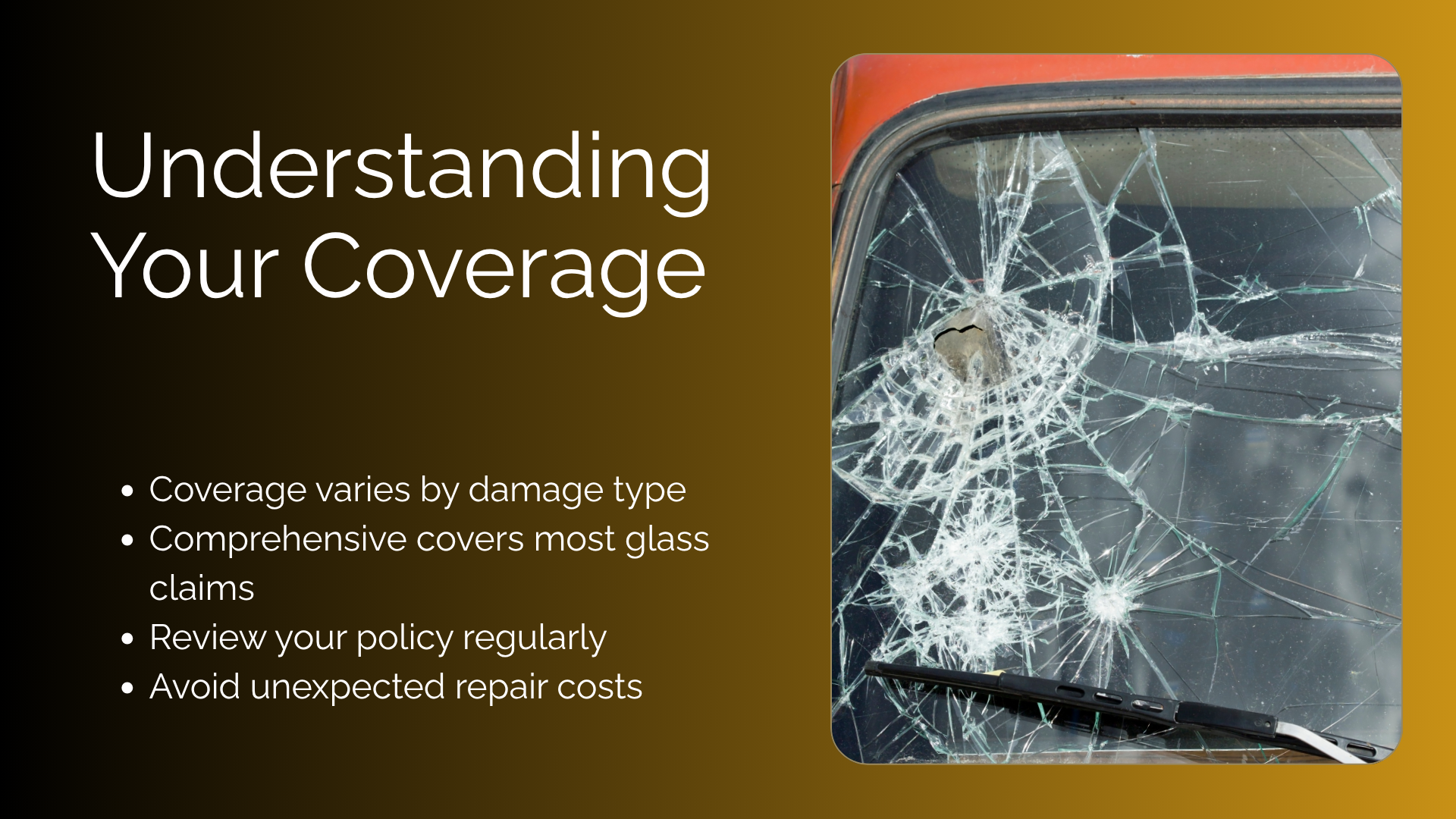
Understanding Auto Insurance Coverage for Glass Repair
Auto glass repair is covered under specific sections of your auto insurance policy, but not all damage types are treated the same way.
Windshields, side windows, and rear glass are typically protected, but how the damage occurred matters for coverage approval.
Comprehensive vs. Collision Coverage
Glass damage from events like road debris, vandalism, hail, falling branches, or animal impacts falls under comprehensive coverage.
Damage from a car accident is only covered by your collision policy.
Here’s what each policy covers:
-
Comprehensive: Non-collision events such as flying rocks, storms, break-ins, or animals
-
Collision: Any accident where your car hits another object or vehicle
An essential fact: Almost 80% of auto glass claims go through comprehensive coverage, not collision.
Which Glass Is Covered and Typical Causes
Most standard policies will pay for:
-
Windshield
-
Side and vent windows
-
Rear window glass
All major panes are generally eligible, as long as you have the right coverage.
Common causes of covered damage include:
-
Pebbles or gravel kicked up on highways
-
Vandalism or attempted theft
-
Tree branches, hail, or severe weather events
-
Unexpected encounters with wildlife
“Picture this: you spot a star-shaped chip on your windshield after a windstorm—if you have comprehensive coverage, you’re typically set!”
Why Comprehensive Coverage Matters
Carrying comprehensive insurance is critical for peace of mind.
Without this, most out-of-pocket glass repairs cost between $200 and $400 for a replacement, while premiums with comprehensive can offset these costs—especially since minor repairs (like chips under 6″) often have deductible waivers.
Fleet owners and dealerships may have broader or specialized policies, often negotiating custom coverage terms to protect multiple vehicles efficiently.
Quick Tips for Every Driver
-
Review your policy: Check if glass repair is included under comprehensive, especially for new vehicles or leased cars.
-
Understand state requirements: Some states (like Florida or Kentucky) require special glass coverage.
-
Contact your insurer directly: A fast call can reveal hidden benefits, glass waivers, or shop recommendations.
Broad coverage equals clear vision and safer driving every day—always protect your ride before that first chip appears.
Key Coverage Types, Deductibles, and State Variations
Comprehensive vs. Full Glass Coverage
Auto glass damage usually falls under comprehensive insurance—the part of your policy that covers non-collision events like rock chips, hail, or vandalism.
With standard comprehensive coverage, you’ll face a deductible, typically $250–$1,000, before insurance picks up the rest. That means even a small chip could cost you out-of-pocket if repair costs are lower than your deductible.
Many insurers now waive the deductible for minor windshield repairs, especially for chips smaller than a dollar bill or cracks under six inches long. This means you could have your windshield fixed at no cost if you act quickly.
If you want even more peace of mind, full glass coverage is often available as an add-on. This option makes all glass repairs—and sometimes even replacements—completely free to you, regardless of the damage size or type.
“With full glass coverage, every rock chip and crack is one less thing to worry about.”
State-Mandated Glass Benefits and Legal Requirements
Some states step in to make glass repairs more affordable—or even free.
-
Florida, Kentucky, and South Carolina require insurers to waive deductibles for windshield repair/replacement, meaning you won’t pay anything out of pocket if you live there.
-
Other states may offer enhanced glass benefits or mandatory coverage options. Always review your state’s guidelines so you know your rights before filing a claim.
Different states have different rules, so it’s smart to double-check your coverage details or ask your agent directly.
“A five-minute state law check can save you hundreds on your next glass repair.”
Cost Implications and Policy Limits
The type of coverage and deductible amount you carry will have a direct impact on your repair or replacement bill.
Higher deductibles generally mean lower premiums but can increase your costs if glass damage occurs.
Insurers may cover only OEE (Original Equipment Equivalent) glass—not always OEM (Original Equipment Manufacturer). Some states or policies allow you to pay the difference if you want the exact factory glass.
Before authorizing any work, always:
-
Review your insurance documents for glass-specific language and coverage limits.
-
Call your agent to confirm what’s covered, what the repair will cost, and whether OEM glass is an option.
“Knowing your policy’s fine print is the #1 way to avoid surprise bills at the glass shop.”
By understanding your deductible, local regulations, and the type of parts allowed, you can make decisions that protect both your wallet and your safety. Always verify before you repair—that’s true clarity on the road.
The Step-by-Step Glass Claim Process
Immediate Steps After Discovering Damage
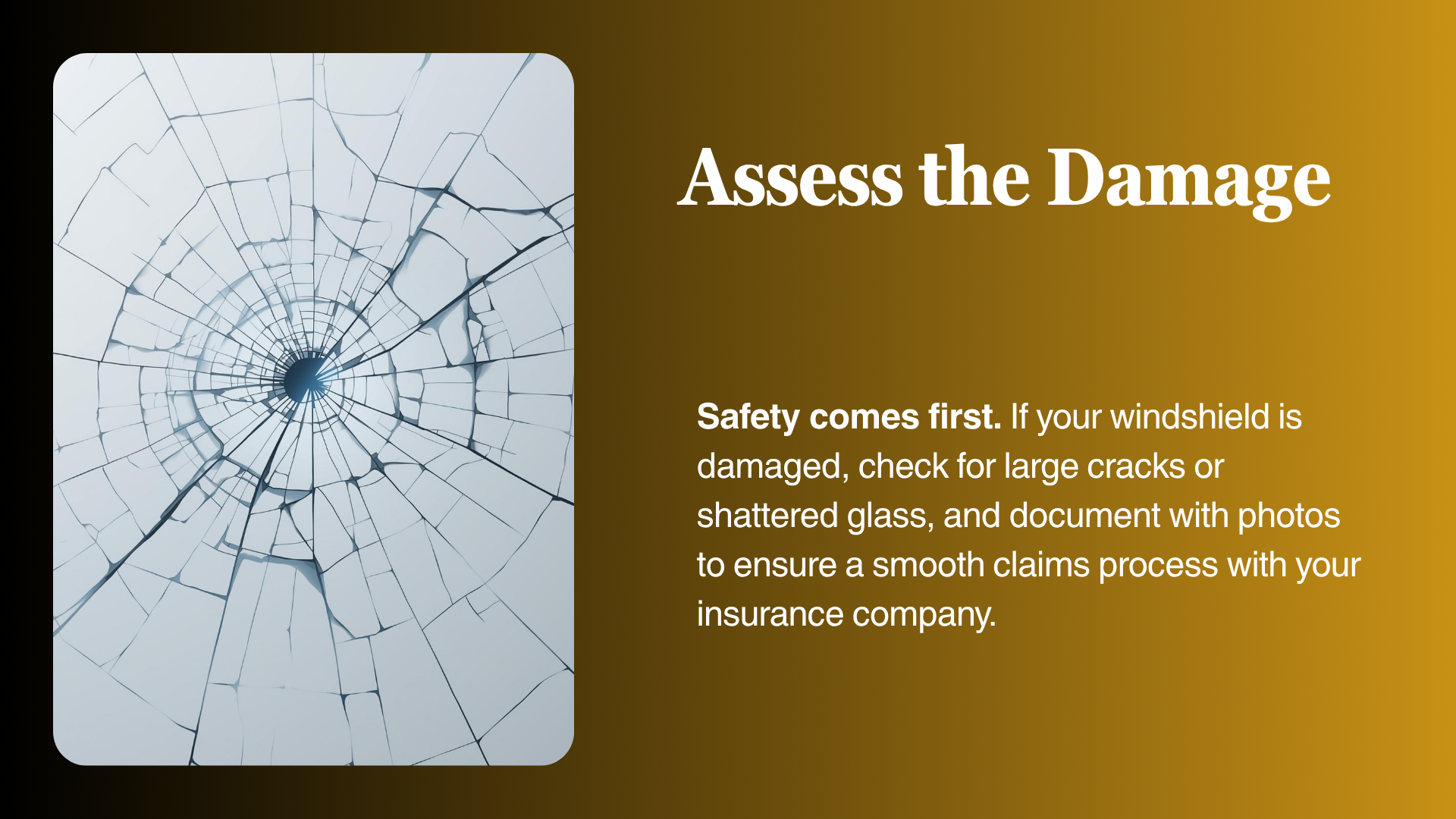
Safety comes first. If your windshield or window is damaged, check right away that you can drive safely—large cracks, shattered glass, or obstructed vision require immediate attention.
Before anything else:
-
Take clear photos of every damaged area, capturing close-ups and wide shots.
-
Write down key details like the time, date, location, and what caused the damage (road debris, vandalism, etc.).
-
Note anything unusual, such as weather conditions or nearby hazards.
These steps create a helpful record for your insurance company and help ensure a smooth, transparent claims process.
At Discount Auto Glass, we recommend documenting your glass damage as the simplest way to keep your claim moving forward—snap photos before you call.
Initiating Contact with Your Insurer
Prompt action is key; reach out to your insurer as soon as possible.
Use their online portal, phone line, or mobile app for fastest service.
Have these items ready:
-
Your policy number
-
All photos and notes
-
A brief description of the incident’s circumstances
A quick call or online claim submission protects your safety, speeds up approvals, and helps ensure you’re covered from the start.
“Filing your glass claim right from your driveway is as easy as snapping a photo and filling out a form.”
Reviewing Coverage and Financial Responsibility
Once your claim is submitted:
Start by confirming whether your policy covers auto glass under comprehensive or full glass coverage—some Insurance and Auto Glass Repair policies even waive deductibles for repairs smaller than a dollar bill.
Clarify:
-
What your deductible is
-
If there are deductible waivers for your specific auto glass damage
-
Your total out-of-pocket cost for the Insurance and Auto Glass Repair
Be direct with your adjuster. Ask: “Will this raise my premium?” and “Does my Insurance and Auto Glass Repair policy require OEM glass, or is OEE acceptable?”
Getting clear answers upfront helps you avoid costly surprises—and keeps your Insurance and Auto Glass Repair process fully transparent and stress-free.
Working with Repair Providers
You have options. Some insurers partner with preferred glass shops, but you can usually choose any certified provider.
-
Compare at least two estimates to get the best value.
-
Ask if your repair can be handled by a mobile technician at your home or work—it often saves time.
-
Weigh the repair cost against your deductible: if a chip fix is $125 and your deductible is $500, paying out-of-pocket makes sense.
“Choose a provider as committed to safety and transparency as you are—your peace of mind is worth it.”
Whether you’re tapping your insurer’s network or selecting your own trusted shop, making sure they support your safety and satisfaction pays off. The right steps ensure a fast, stress-free repair that brings you quickly back to clear, confident driving.
Repair or Replace? Determining the Right Solution
How Insurers and Technicians Decide
When your auto glass is damaged, technicians and insurers use clear criteria to determine if a repair or full replacement is the safest—and most cost-effective—option.
They’ll look at:
- Size: Chips smaller than a quarter or cracks shorter than 6 inches usually qualify for repair.
- Depth: Surface-level damage is often repairable, while deeper cracks threaten the glass’s structural strength.
- Location: Damage in the driver’s direct line of sight, at the edge of the windshield, or in areas with sensors often calls for replacement.
- Type of Damage: Multiple or spreading cracks, or shattered glass, require replacement.
Simply put: If the damage is small, shallow, and isolated, repair is the go-to solution.
What Each Method Offers
Repair comes with these real-world advantages:
- Preserves the original factory seal, protecting your car from leaks and corrosion.
- Faster turnaround—most repairs are complete in as little as 30 minutes.
- Lower cost—a typical chip repair is $100–$150, often free with deductible waivers.
Replacement is necessary when:
- Damage compromises safety or visibility.
- The windshield is severely cracked, chipped in multiple spots, or shattered.
- Your vehicle’s advanced driving assistance systems are affected.
Expect windshield replacement to take 60–90 minutes and cost $350–$700 before insurance.
Safety, Insurance Approval & Warranty Insights
Insurers prefer repair over replacement whenever it’s safe, as this saves money and maintains original safety standards.
However, warranty considerations are also important:
- Most shops guarantee repairs for the glass’s lifetime against future spreading.
- Replacements come with workmanship warranties, but always confirm specifics before you book.
Remember: OEM vs. OEE glass matters. Insurance may only cover equivalent parts (OEE), unless OEM is specified in your policy. Always clarify this to avoid surprise costs.
Smart Steps for Vehicle Owners
Picture this: You notice a quarter-sized chip on your windshield after a drive through a construction zone. When it comes to Insurance and Auto Glass Repair, the first step is to document the damage, check your insurance policy, and contact a trusted auto glass technician. They’ll advise you whether a quick repair—often preserving your original seal—is possible. Best of all, if your insurer waives the deductible, Insurance and Auto Glass Repair might cost you nothing out-of-pocket.
“Repair first, replace only when safety demands it” is the golden rule in auto glass insurance services.
A small, clean chip can save you hundreds and protect your vehicle’s structural integrity—proof that smart Insurance and Auto Glass Repair decisions go a long way.
The key takeaway: Prompt professional assessment under your Insurance and Auto Glass Repair coverage maximizes safety, keeps your vehicle protected, and helps you drive away with confidence and clear vision.
Minimizing Out-of-Pocket Expenses and Maximizing Coverage
When to File a Claim vs. Pay Out-of-Pocket
Knowing when to file a claim for Insurance and Auto Glass Repair can keep more money in your pocket and prevent unnecessary insurance headaches.
If a windshield chip repair costs $120 but your comprehensive deductible is $500, it’s often smarter to pay out-of-pocket and skip the Insurance and Auto Glass Repair claim.
Most insurance companies waive deductibles for minor auto glass repairs—usually for cracks or chips under 6 inches. This means Insurance and Auto Glass Repair can often be free or very low cost for policyholders, with no extra impact on your wallet.
Before contacting your provider, quickly compare:
-
The auto glass repair or replacement estimate from a trusted shop
-
Your deductible amount (check your policy or call your agent)
-
Any deductible waivers or full glass coverage endorsements related to Insurance and Auto Glass Repair in your state
Here’s a smart tip: Glass claims under Insurance and Auto Glass Repair rarely increase your premiums, since they’re typically not at-fault events. But if your policy allows unlimited claims, double-check if there are any limits to how many auto glass claims you can file per year.
Picture this: A pebble leaves a quarter-sized chip on your windshield—it’s covered under Insurance and Auto Glass Repair, costs you $0, and gets fixed in just 30 minutes. That’s peace of mind at work.
Promotions, Discounts, and Shop Guarantees
Leveraging shop promotions and insurer partnerships can further reduce or eliminate costs, especially in 2025’s competitive auto glass market.
Reputable providers help clients save with:
- Clear, upfront pricing and transparent quotes
- Honoring most insurance networks and offering direct billing
- Service guarantees and lifetime workmanship warranties
- Seasonal discounts, referral bonuses, or bundled services
Typical warranty coverage for auto glass repairs spans from a lifetime guarantee on workmanship to free fixes for future chips or cracks.
Look for signs of a safety-first shop:
- Certified technicians using top-grade glass
- Mobile repair options for your convenience
- Genuine concern for your vehicle’s and your safety
“Choose a provider who puts your safety and clarity first—never settle for shortcuts or mystery costs.”
In short, comparing costs against your deductible, knowing your waiver rights, and choosing a transparent shop lets you enjoy safe, worry-free repairs without surprise expenses. Staying informed means you get clear vision and safe driving—today and every day.
Documentation, Repair Expectations, and Special Vehicle Situations
For a smooth claims process:
- Document the damage with clear, close-up photos
- Write down when, where, and how the damage occurred
- Have your policy number ready before contacting your insurer
If you manage fleet vehicles, lease, or drive a luxury model, here’s what to expect:
- Fleet and leased vehicle claims may require approval from the fleet manager or leasing company
- Luxury vehicles often involve higher repair costs—review your policy for exact coverage details and deductible differences
Certifications, Standards, and What to Expect from Repairs
Look for shops certified by Auto Glass Safety Council (AGSC) or holding technician certifications—this ensures repairs meet safety and quality standards.
Typical repair facts:
- Repairs usually take about 30 minutes; replacements can take 1-2 hours
- Most insurers waive deductibles for minor repairs, making small fixes often free
- Lifetime warranties are common from quality-focused repair shops for added reassurance
Memorable Customer Moments and Takeaways
Knowing your options around insurance and auto glass repair and asking the right questions truly empowers you to protect your investment and drive with confidence. When you understand how auto glass repair coverage works within your insurance policy, you gain the clarity needed to make fast, informed decisions—whether it’s a minor chip or a full replacement.
When you’re facing glass damage, remember: Safety, transparency, and stress-free service are non-negotiable in the world of insurance and auto glass repair. Preparing with the right documentation, understanding your coverage limits, and choosing certified professionals guarantees you’ll be back on the road—clearly, securely, and without unexpected costs. Your ability to navigate insurance and auto glass repair confidently ensures long-term peace of mind and clear vision on every drive.
FAQ
-
Can I file a claim for Insurance and Auto Glass Repair without affecting my premium?
Yes—most Insurance and Auto Glass Repair claims fall under comprehensive coverage and do not raise your rates. Because glass damage is usually uncontrollable (rocks, storms), insurers treat it as a non‑fault event. Always confirm with your policy or agent if your insurer views glass claims similarly. -
What types of glass damage does Insurance and Auto Glass Repair cover?
The coverage typically includes chips, cracks, and breakage in windshields, side windows, and rear glass. Under Insurance and Auto Glass Repair, minor chips (under ~6 inches) often qualify for repair, while extensive damage, deep cracks, or areas near sensors may require full replacement. -
Is deductible waived under Insurance and Auto Glass Repair?
Many insurers now offer deductible waivers specifically for Insurance and Auto Glass Repair when damage is minor. For example, chips smaller than a dollar bill or cracks below six inches are often repaired at no cost to you—so long as your policy includes these benefits. -
Do I need to use a shop recommended by my insurer under Insurance and Auto Glass Repair?
No—you generally have the freedom to select any qualified repair provider under Insurance and Auto Glass Repair. However, your insurer may have preferred shops or network partners; check whether they require certification (such as AGSC) before you proceed. -
How soon should I repair damage under Insurance and Auto Glass Repair?
You should act as soon as possible. With Insurance and Auto Glass Repair, early action helps prevent chips from spreading into serious cracks. Prompt documentation, filing, and repair increase the chances of waiver coverage and preserve structural integrity of your windshield.
Conclusion
Protecting your vehicle’s glass isn’t just about avoiding unexpected costs—it’s about ensuring the safest, clearest drive every time you hit the road. With the right Insurance and Auto Glass Repair support, you’re in control. The combination of strong insurance coverage and a trusted repair partner helps every journey start with clarity and confidence.
Your choices today shape both daily peace of mind and long-term value. A proactive approach to Insurance and Auto Glass Repair protects your safety, maximizes your benefits, and minimizes your expenses.
At Discount Auto Glass, we’re committed to helping you make smart, stress-free decisions that keep your vehicle—and your view—clear.
Here’s how you can take charge right now:
- Review your insurance policy—be sure comprehensive or full glass coverage is included, especially for new, leased, or fleet vehicles.
- Document any glass damage immediately with clear photos and notes; preparation speeds up claims and guarantees accuracy.
- Choose a certified, safety-focused repair shop—prefer providers that emphasize transparency, quality, and customer service.
- Ask your agent about deductible waivers or state-specific benefits so you never pay more than you should.
- Schedule prompt repairs for chips or cracks—acting early can often mean no out-of-pocket cost and helps preserve your vehicle’s safety.
Ready to get started?
- Inspect your vehicle’s glass this week for chips or cracks—don’t wait for problems to grow.
- Call your insurer or agent with questions about your current coverage or deductible options.
- Connect with a trusted auto glass technician who values your safety as much as you do.
When it comes to your vehicle, compromise isn’t an option—clarity and confidence come standard when you put safety first. Every chip repaired and every claim handled with care brings you closer to worry-free driving.
Drive forward with peace of mind and a crystal-clear view. Your focus belongs on the journey ahead.
“Clear Vision, Safe Driving—it’s more than a tagline. It’s our promise to you.”
Thank you for choosing Discount Auto Glass. Fast, reliable service with a lifetime guarantee. Visit us or enjoy our mobile service.