
June 10, 2026
Windshield Replacement Process & Costs: What to Expect
Understanding the windshield replacement process and costs helps you make safe, informed choices and ensures maximum value from your repair. Here’s exactly what to expect and what actions protect your investment—so you drive away with confidence, clarity, and total peace of mind.
- Safety and clarity come first—every reputable provider uses professional inspections, transparent quotes, and strict safety protocols to guarantee a precise fit and safe installation.
- Vehicle details and features drive costs—replacements range from $250–$600 for standard vehicles and can top $1,200–$2,500+ for luxury or ADAS-equipped models, so know your car’s features before booking.
- Professional protection and prep—technicians carefully shield your interior and exterior, use specialized tools for removal, and conduct a detailed frame inspection before installing new glass.
- Attention to calibration matters—if your vehicle has ADAS (Advanced Driver Assistance Systems), expect expert camera and sensor recalibration, with written proof for your records.
- Insurance often covers replacement—comprehensive auto policies can reduce or eliminate out-of-pocket costs, especially when the shop handles claims and paperwork directly with your insurer.
- Account for safe drive-away time—never rush the process; most adhesives need a minimum 1-hour cure before driving and 24–48 hours for full strength, so always follow aftercare guidance.
- Demand transparency and a clean finish—insist on a written estimate, thorough post-install checklist, and warranty coverage for leaks or defects, ensuring no hidden surprises.
- Aftercare protects your investment—follow the pros: wait at least one hour before driving, keep tape on for 24 hours, and avoid harsh washes or slamming doors during the first two days for optimal results.
By knowing these essentials, you safeguard your vehicle, wallet, and peace of mind—read the full article for a step-by-step breakdown and cost-saving tips tailored to your needs.
From Crack to Clear: What Every Driver Needs to Know
A single rock kicked up on the highway can lead to a spiderweb crack threatening both your safety and clear vision behind the wheel. If you’ve ever faced this sudden windshield damage, you know how unsettling it feels—and how urgent it is to fix.
But here’s what most drivers don’t realize: the quality of your windshield replacement isn’t just about looks or quick fixes—it’s about your protection in every drive, rainstorm, or sudden stop.
Choosing the right provider can mean the difference between crystal-clear safety and years of frustrating problems. Discount Auto Glass was founded with this truth in mind: affordable, trustworthy service is non-negotiable when your safety and satisfaction are at stake.
You might be wondering:
- What really happens during a professional windshield replacement?
- How much should you expect to pay for repairs, especially if your car has sensors, specialty glass, or advanced features?
- Which questions help guarantee a safe, hassle-free experience with no hidden fees or low-quality shortcuts?
- And what aftercare steps matter most for long-term peace of mind?
In this guide—built from our commitment to integrity, transparency, and premier craftsmanship—you’ll get answers to every step, from the initial inspection and quote to drive-away safety and final tips for protecting your new glass.
Whether you’re booking for yourself, a fleet, or your dealership, you’ll know exactly what to expect and how to ensure clear vision and safe driving, every mile ahead.
Ready to see how a reliable windshield replacement process unfolds—and which details ensure your car, and your confidence, are protected at every stage? Read on for the professional process trusted by thousands and discover how knowledge is your clearest route to peace of mind.
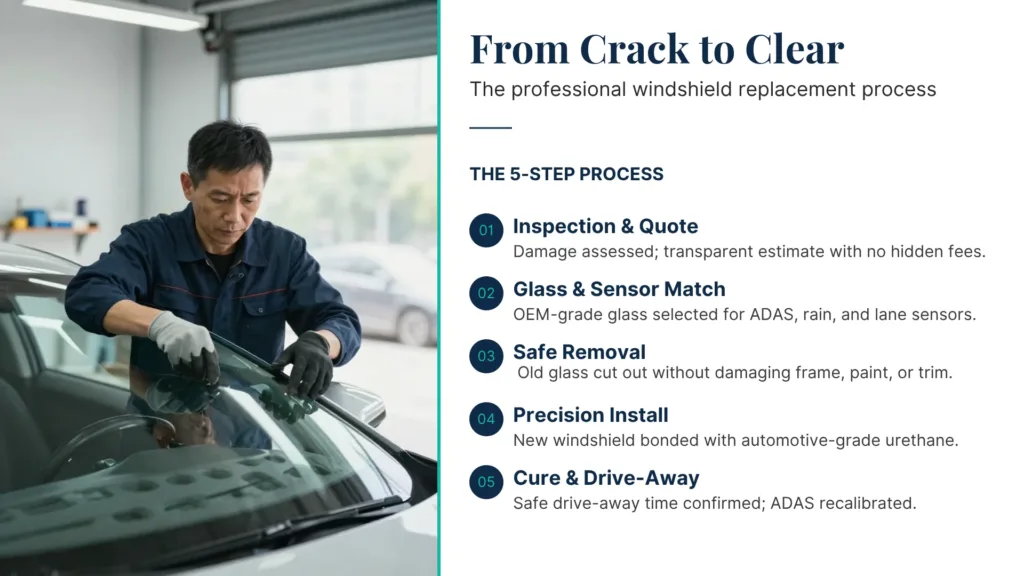
Step-by-Step Windshield Replacement Process
A. Initial Inspection and Quote
The process begins with a professional technician evaluating your windshield’s damage—size, location, and severity—to ensure replacement is necessary, not just repair.
Your vehicle’s year, make, model, and features (like ADAS cameras, rain sensors, HUD, or heated glass) are recorded to guarantee the exact fit.
You’ll receive a clear, written quote showing the parts, process, and full cost breakdown before any work begins.
Many shops also:
- Assist with insurance claims, walking you through approvals and paperwork.
- Prioritize transparency and safety, ensuring you understand every recommendation before moving forward.
“Expect clarity from the start—no surprises, no hidden steps, just trustworthy info every time.”
—
B. Vehicle Preparation
Before work starts, your vehicle’s seats, dash, steering wheel, and paint are carefully protected with special covers.
Technicians remove:
- Wipers, trim, moldings, and the cowl panel to access the damaged glass.
- The rearview mirror and any sensors/cameras attached to the windshield, prepping them for transfer to the replacement.
A quick walkaround or photo documentation confirms your car’s condition prior to installation.
“Picture this: Your ride, fully safeguarded, every surface covered—peace of mind built into every job.”
—
C. Removing the Old Windshield
Specialized tools like a cold knife, wire, or power cutters gently separate the windshield from factory adhesive.
Technicians:
- Remove the old glass carefully to avoid scratching paint or bending the frame.
- Trim away remaining urethane on the pinchweld, leaving a smooth, clean surface for the new install.
Precision matters—damage-free removal protects your vehicle’s appearance and structure.
—
D. Frame Inspection and Prep
The exposed frame (pinchweld) is checked for rust, corrosion, or exposed metal.
If issues are found:
- Primer is applied to any bare spots to stop future problems and ensure long-lasting adhesion.
The pinchweld and the edge of the new windshield are then:
- Thoroughly cleaned
- Primed if specified by manufacturer guidelines
“Small details matter—your new windshield is only as strong as the prep work beneath it.”
—
E. Installing the New Windshield
A precise, continuous bead of fresh urethane is laid down to prevent leaks and ensure a safe, reliable fit.
The glass is placed using:
- Suction tools and teamwork to align with factory specs
- Temporary retention tape to stabilize the windshield as adhesive cures
Immediate quality checks catch any mistakes before you leave.
—
F. Reassembly and Cleanup
All components—wipers, trims, mirrors, and any ADAS sensors or cameras—are reinstalled with care.
The technician:
- Vacuums interior and exterior for any stray glass
- Confirms cleanliness, proper alignment, and tight trims
For ADAS vehicles, expect camera/sensor recalibration either onsite or scheduled through a partner.
—
G. Curing and Safe Drive-Away Time
Most urethanes require a minimum 1-hour wait before driving—technicians explain when it’s safe to hit the road.
Full adhesive strength develops over 24–48 hours, so aftercare instructions are provided for maximum safety.
“Never compromise drive-away safety—wait times mean your windshield is secure, now and for the long haul.”
—
The entire windshield replacement is structured for maximum protection, transparency, and your peace of mind. When you know the process, you can drive away with full confidence in your safety and the quality of your new windshield.
Windshield Replacement Costs: Understanding Price Factors
Typical Price Ranges by Vehicle and Features
Windshield replacement costs vary based on your vehicle and its features.
- Standard vehicles: $210–$600, with most jobs between $250–$600.
- Models with ADAS (advanced driver-assist systems): $400–$1,200+, and sometimes as high as $1,500 with calibration included.
- Luxury, specialty, or OEM glass (heated/acoustic, HUD): $700–$1,500+; in rare cases, just the glass can top $2,500.
Picture this: replacing a basic sedan windshield might cost $290, while a new heated windshield with lane-keep camera on a premium SUV can run over $1,300.
“The right glass at the right price keeps you safe and in control—no surprises.”
Key Drivers of Cost
Every price quote comes down to certain choices and circumstances.
- Vehicle type: Compact? Full-size? SUV or luxury? More features, higher replacement cost.
- Special glass features: Rain or light sensors, upgraded tints, heads-up display, or heated zones all raise the price.
- OEM (original manufacturer) vs aftermarket glass: OEM offers exact factory specs, often at a premium. Aftermarket can cost 30–50% less.
- ADAS recalibration: If your car uses cameras or sensors, precise calibration is a must—costs range from $150–$600+ and take extra time.
- Mobile vs in-shop: Mobile service is convenient for busy schedules, sometimes adding a small surcharge.
“Features like ADAS or rain sensors can easily double your replacement budget—know what’s built into your windshield before scheduling.”
Insurance Coverage and Claims Process
Good news: Comprehensive auto insurance usually covers windshield replacement, sometimes with a zero deductible.
- Be prepared with your insurance card, policy number, and claim details for the fastest service.
- Professional shops can submit claims directly and coordinate approvals—one less hassle for you.
“A reputable provider takes care of the paperwork, so customers get back on the road safely and stress-free.”
National and Regional Pricing Data
Nationwide, typical costs land between $250 and $700, says AAA and other major chains, with most drivers paying $350–$550.
Local prices can swing due to:
- Labor costs and regional supply
- Short-term parts availability
- Seasonal demand spikes
Specialty vehicles and rare parts will almost always land at the high end, especially for European or dealer-only models.
If you’re comparing options, request a written quote that breaks down all parts, features, and labor.
Knowing what drives the cost—vehicle features, calibration, and insurance details—empowers you to make safe, informed choices before booking your windshield replacement.
Appointment Timeline and Service Flow
Typical Duration and What to Expect
A standard windshield replacement is designed for minimal disruption to your day.
Most appointments for typical vehicles last 1 to 1.5 hours. If your vehicle has driver assistance features like ADAS, expect up to 3 hours—including calibration and paperwork.
Picture this: you arrive at the shop or greet a technician at home, and the process unfolds like clockwork:
- Check-in and review of your vehicle’s details
- Inspection and quote review: everything is explained clearly
- Interior and exterior protection to ensure your car stays spotless
- Windshield replacement, calibration (if needed), and quality check
- Final cleanup, aftercare instructions, and safe drive-away time provided
You can expect bullet-proof attention to safety and factory precision, whether your windshield swap happens curbside or in-shop.
“A quality windshield replacement is as much about your peace of mind as it is about the glass itself.”
—
Ensuring Safe Drive-Away Timing
It’s critical not to drive too soon: most adhesives require at least 1 hour to cure safely.
Shops use manufacturer guidelines—factoring in temperature and humidity—to set the exact safe drive-away time.
- Standard installation: minimum 1-hour hold after replacement
- Full adhesive cure for max strength: 24–48 hours
Never rush the wait—it ensures your windshield protects you in a sudden stop or collision.
Imagine a technician peeling off the retention tape and giving the green light—a clear, reassuring sign that safety comes first.
“The difference between a secure installation and a risky one can be just 30 minutes—timing matters.”
—
Customer Service Practices
Communication is constant and professional at every step.
You’ll receive:
- Status updates (text or in-person)
- Clear aftercare instructions and Q&A opportunity
- Flexible scheduling: mobile service or drop-off options, matching your routine
Mobile service offers extra convenience, but some complex calibrations or specialty vehicles may require an in-shop visit for best results.
Expect briefings before, during, and after—the goal: total confidence as you get back on the road.
“Prompt updates, transparency, and a spotless finish—true service means never guessing what happens next.”
—
With clear communication, proven safety protocols, and highly efficient work, your windshield replacement fits seamlessly into your schedule—so you can focus on clear vision and safe driving from the moment you leave.
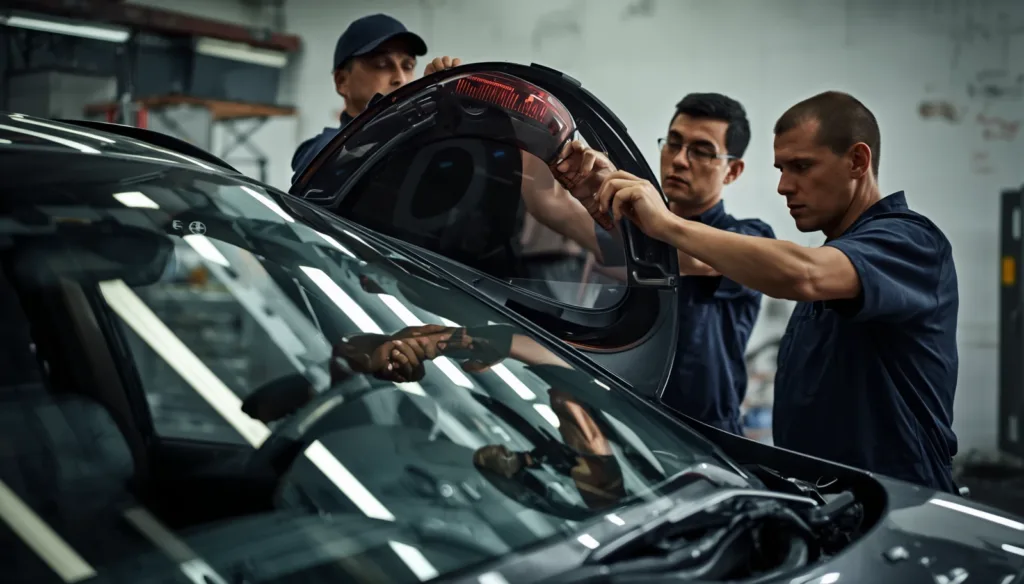
What Customers Should Expect and Verify
Before the Appointment
Comparing windshield replacement quotes is about more than just price—it’s about safety, process, and peace of mind.
Ask every shop to detail:
- Glass type: Is it OEM or aftermarket?
- ADAS calibration: Included for vehicles with lane-assist or safety cameras?
- Mobile service fees: Any surcharge for mobile vs. in-shop?
- Warranty coverage: What’s included for leaks, stress cracks, or workmanship?
Expect a clear, written estimate—no vague promises. A reliable provider will walk you through all options and notify you if additional costs are possible.
If using insurance, confirm:
- Will the shop help file your claim and submit needed documents?
- Can they work directly with your insurer to minimize paperwork?
“A quality shop offers price transparency—no surprises, just safe, professional service.”
—
During and Immediately After Installation
Protection and communication count most during service. Imagine seeing your dashboard and seats protected with crisp covers—no stray glass, no mess.
Expect your technician to:
- Safeguard your paint and interior at every step
- Remove and reinstall every mirror, sensor, and trim with care
Communication is key:
- You’ll get a step-by-step explanation of what’s happening and what comes next
- Ask for your drive-away timing and aftercare sheet before you leave
Use this post-install checklist:
- Glass alignment: Straight, even gaps all around
- Trim and molding: Snug, no edges popping up
- Cleanliness: No adhesive smears, glass bits, or “mystery spots”
“Professional installers treat your car like their own—every detail matters.”
—
For ADAS-Equipped Vehicles
Modern vehicles require more than just new glass; ADAS cameras and sensors often need calibration.
How it’s handled:
- Calibration performed onsite or by a trusted partner/dealer
- Technician provides written confirmation of ADAS calibration or schedules it before you leave
Post-service tips:
- Watch for dashboard alerts or malfunction lights
- Test lane keep, automatic braking, or other driver-assist features on your first drive
“Always verify ADAS recalibration—and expect your systems to work like new after replacement.”
—
Checking Workmanship and Quality
A quality job leaves your car better than it arrived. Walk around and check:
- Even, tight glass seams—no daylight or finger gaps
- Trim and moldings firm with zero “lift” or loose sections
- Spotless interior—no leftover adhesive or glass specks
Notice wind noise, leaks, or anything odd? Reach out—responsive shops fix issues fast and stand behind their work.
—
A little diligence up front gives you confidence and lasting safety after your windshield is replaced. Choose a shop with transparent quotes, proven processes, and rock-solid customer care for a truly worry-free experience.
Aftercare: Protecting Your New Windshield
Essential Do’s for First 24–48 Hours
Paying attention to your new windshield’s initial care is essential for safety and long-term reliability.
Follow these professional recommendations for the first 24–48 hours after installation:
- Wait at least one hour before driving—adhesive needs time to set for maximum safety.
- Leave retention tape on for 24 hours to keep the glass secure while the seal cures.
- Crack your window slightly in hot weather to equalize pressure and prevent stress on the new seal.
- Drive gently—avoid potholes, hard brakes, and off-road routes to keep everything in place.
“The first 24 hours are the most important for your new windshield’s lifetime performance.”
Important Don’ts to Prevent Complications
Small missteps during aftercare can create big issues down the road.
Avoid these common mistakes:
- Don’t visit high-pressure car washes or use harsh cleaning chemicals for at least two days—water and force can weaken the bond.
- Don’t slam doors with all windows up right after replacement—sudden pressure spikes can break the seal.
- Don’t remove retention tape early or overuse windshield wipers during the initial cure.
Picture this: A splash of water or single door slam can compromise the brand-new seal, leading to leaks or wind noise. Gentle care now means peace of mind later.
When to Contact Your Provider
Some post-installation signs mean it’s time to reach out for support and warranty service.
Contact your provider immediately if you notice:
- Persistent wind noise at highway speed or water leaks after rain.
- Shifting trim, misaligned molding, or any loose edges.
- Dashboard warning lights (for ADAS-equipped vehicles).
You’re always covered—our customer-first warranty means expert help is just a call away.
Commitment to Service and Safety
Discount Auto Glass stands for clear communication and lasting safety—not just during installation, but for every mile afterward.
- Expect transparent follow-up, accessible support, and honest answers every time.
- We welcome feedback and stay in touch to ensure your satisfaction—“Your safety is our top priority, long after you drive away.”
Knowing these aftercare steps gives you confidence that your new windshield is protected from day one and backed by a provider committed to your long-term satisfaction.
Drive Away Safer, Smarter, and Fully Protected
A safer, clearer drive starts with knowing exactly what to expect from windshield replacement—from process to price and peace of mind. By trusting your vehicle to skilled professionals who put your safety and satisfaction first, you’re investing in reliability that goes far beyond a simple piece of glass.
—
Key Takeaways
- Choose a provider who guarantees transparency, professional craftsmanship, and supports you with thorough communication at every step.
- Verify what’s included in your replacement—ask about OEM or aftermarket glass, ADAS calibration, and written warranty coverage before booking.
- Follow all aftercare instructions in the first 24–48 hours to ensure a perfect seal and lasting safety for every mile ahead.
- Watch for signs of issues (like wind noise or leaks) and reach out for warranty support without hesitation—responsive service is part of quality care.
- Request help with insurance claims to minimize hassle and get back on the road quickly and confidently.
—
Next Steps
- Contact a trusted shop today for a clear, written quote and get your questions answered upfront.
- Gather your vehicle and insurance details so your appointment runs smoothly and efficiently.
- Schedule your windshield replacement—choose between mobile convenience or in-shop precision based on your needs.
- Share your experience and safety tips with friends; keeping clear vision on the road benefits everyone in your community.
—
Choosing the right partner for your windshield replacement empowers you to drive forward with confidence, safety, and absolute trust in your vehicle’s protection.
Clear vision, safe driving—it’s not just our promise. It’s your new standard.
FAQ
1. How long does the windshield replacement process take from start to finish?
The windshield replacement process typically takes 1 to 1.5 hours for standard vehicles. If your car is equipped with ADAS features such as lane-keep assist or forward collision cameras, the full windshield replacement process — including sensor recalibration and paperwork — can extend up to 3 hours. Always confirm timing with your provider when booking.
2. What steps are included in a professional windshield replacement process?
A complete windshield replacement process includes an initial damage inspection and written quote, full vehicle protection, careful removal of the old glass, frame and pinchweld prep, precise urethane application, new glass installation, reassembly of all trims and sensors, ADAS recalibration if needed, and a final quality check before safe drive-away.
3. How much does the windshield replacement process cost for vehicles with ADAS?
For standard vehicles, the windshield replacement process typically costs between $250 and $600. If your vehicle has Advanced Driver Assistance Systems, the windshield replacement process — including required camera and sensor recalibration — can range from $400 to $1,500 or more depending on the make, model, and glass type.
4. Does insurance cover the windshield replacement process?
In most cases, yes. Comprehensive auto insurance policies often cover the windshield replacement process, sometimes with a zero deductible. A reputable shop can handle the entire claims process directly with your insurer, minimizing paperwork and getting you back on the road faster.
5. What aftercare is required after the windshield replacement process is complete?
After the windshield replacement process, wait at least one hour before driving and leave the retention tape in place for 24 hours. Avoid high-pressure car washes, slamming doors, or harsh chemicals for the first 48 hours. Full adhesive strength develops within 24 to 48 hours, so following these steps ensures a secure, leak-free seal and long-term performance.
Thank you for choosing Discount Auto Glass. Fast, reliable service with a lifetime guarantee. Visit us or enjoy our mobile service.