
December 13, 2025
Understanding Certifications for Auto Glass Technicians
Key Takeaways
Understanding certifications for auto glass technicians ensures your vehicle is in skilled, trustworthy hands—directly impacting both safety and long-term satisfaction. Here’s what you need to know to confidently choose a repair partner and demand the highest standards for your vehicle and your peace of mind.
- Certification guarantees top-tier safety by ensuring every repair meets strict industry, compliance, and vehicle integrity standards—protecting you and your passengers.
- Leading organizations (AGSC, NGA, IGA, NWRA) set recognized benchmark certifications that are trusted by insurance companies, dealerships, and fleet operators.
- Certified shops display visible proof—look for up-to-date credentials from major certifying bodies in the lobby, on uniforms, or through easy-to-verify online databases.
- Certification isn’t just a badge—it’s ongoing; most require renewal every three years via exams and continuing education to keep skills sharp and align with new vehicle technology.
- Customers report 30% fewer installation errors and greater warranty satisfaction when choosing certified technicians for their auto glass needs.
- Simple verification steps protect you: ask to see certifications, confirm renewal dates, and check for staff training, ensuring your technician is held to the highest safety and quality standards.
- Professionalism, transparency, and clear communication are trademarks of certified providers—never settle for less than visible proof of expertise when it comes to your safety.
- Certification is your clearest sign of integrity—selecting a certified shop means investing in your vehicle’s reliability, long-term value, and safe driving every mile.
By knowing what certification means and how to verify it, you make every repair an investment in safety and trust—read the full article to choose the best for your vehicle and peace of mind.
Introduction
You buckle up, ready for the drive ahead—but did you know that your windshield provides up to 70% of your vehicle’s roof strength in a rollover? For countless drivers, this fact isn’t just surprising—it’s a wake-up call about the crucial role of quality auto glass installation.
A single shortcut or misstep in replacing your windshield can put you, your passengers, and your investment at risk. Yet, it’s not always obvious which shops truly deliver safe, precision-focused auto glass service. That’s where certification comes in.
Certification isn’t just a nice-to-have. It’s your first line of defense against hidden dangers, costly mistakes, and the headaches of re-repairs or insurance disputes. For customers, fleet managers, and even dealerships, knowing your technician is certified means:
- Every install meets the latest safety standards and compliance rules
- Transparent repair records that build long-term trust
- Protection for warranty, resale value, and—most importantly—peace of mind
With modern vehicles packed with Advanced Driver Assistance Systems (ADAS), calibration and technical skill have never mattered more. That’s why most insurance carriers and commercial fleets now prioritize certified auto glass shops.
Expect more than a sticker by the cash register. Certification is proof that your repair technician has passed rigorous training, ongoing education, and real-world testing. It’s the difference between “good enough” and service that protects your safety on every mile.
In the next sections, you’ll discover:
- What makes a technician certified—and why it matters to your security
- How leading industry organizations (like AGSC and NGA) set the gold standard for training and compliance
- Key benefits that certified shops deliver—consistently, transparently, and reliably
Now, let’s take a closer look at why certification should top your checklist every time your vehicle needs glass repair or replacement—and how it directly impacts your safety and confidence on the road.
The Importance of Certification in Auto Glass Repair
A certified auto glass technician is more than just a skilled worker—they’re a safety advocate for both you and your vehicle. Certification ensures that every installation follows the latest safety, quality, and compliance standards, minimizing the risk of improper work that could put you in danger.
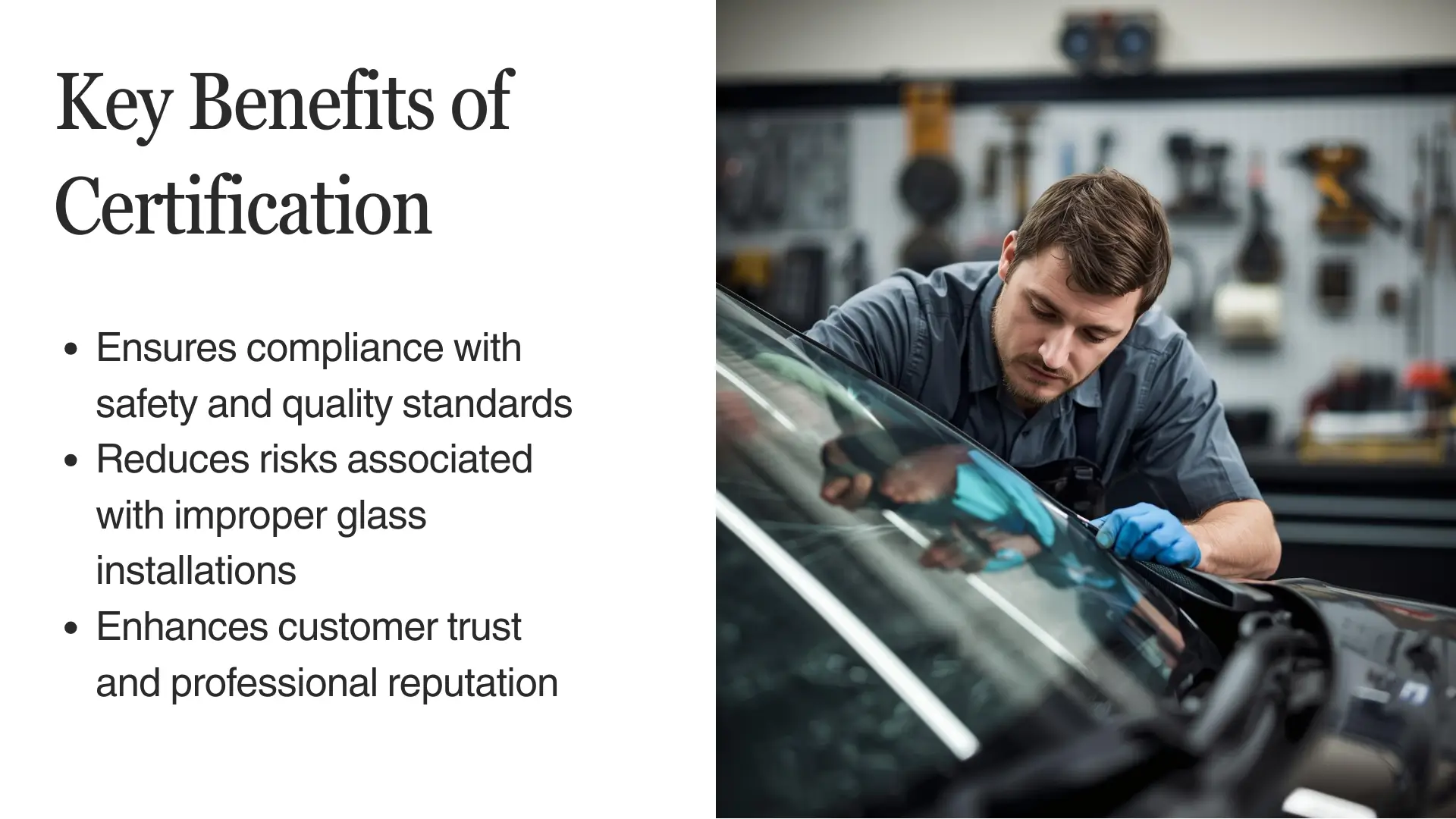
Why Certification Matters for Safety and Trust
Auto glass is critical to a vehicle’s structural integrity and driver safety. Without proper training, even a small installation error can lead to:
- Compromised airbag performance
- Increased risk of glass detachment in a collision
- Costly wind noise, leaks, or visibility issues
According to industry studies, up to 70% of structural strength in a rollover comes from properly installed auto glass.
When you see certifications like AGSC or NGA, you know your technician has proven expertise—not just promises.
Raising the Bar: Industry Standards and Compliance
Certification bodies—such as the Auto Glass Safety Council (AGSC) and the National Glass Association (NGA)—set clear guidelines for:
- OSHA compliance
- Advanced Driver Assistance System (ADAS) calibration
- Installation methods and adhesive safety
- Ongoing training to keep skills sharp
Insurance companies and fleet operators almost always choose shops staffed by certified professionals for peace of mind.
Benefits for Technicians, Shops, and Customers
For the technician, certification means staying competitive, employable, and up-to-date as vehicle technology changes. For customers, it’s about trust—knowing every repair meets the highest quality benchmarks.
Picture this: two identical repair shops. One proudly displays AGSC certificates; staff can instantly explain AGRSS standards and answer all your questions. The other cannot. Which feels safer?
- Certified shops deliver:
- Consistent quality—every repair, every time
- Insurance-approved service and streamlined claims
- Long-term relationships built on integrity and transparency
Certified Installation = Safer, More Satisfying Results
Certified installation means:
- Fewer call-backs and re-repairs
- Optimal windshield performance for airbags and crash safety
- Clear records for future warranty and resale value
“When you choose a certified technician, you’re not just buying a repair—you’re investing in your safety.”
The single best move you can make for safe driving and peace of mind? Always insist on proven, up-to-date certification when selecting your auto glass repair provider.
Major Certification Bodies in the Auto Glass Industry
When you need auto glass repair, choosing a technician with the right certifications gives you confidence in both safety and workmanship.
Certification standards aren’t just paperwork—they’re the backbone of trusted, transparent service.
The Four Leading Certification Bodies
The auto glass industry relies on a handful of key organizations to set and enforce quality benchmarks:
- Auto Glass Safety Council (AGSC): Known as the industry’s “gold standard,” AGSC certifications are recognized by top insurance companies and dealerships nationwide.
- National Glass Association (NGA): Offers a tiered certification program trusted by both individual technicians and commercial fleets across North America.
- Independent Glass Association (IGA): Focuses on small business and independent technician education, with reach across the United States.
- National Windshield Repair Association (NWRA): Specializes in windshield (laminated glass) repair standards, particularly ANSI/NWRA/ROLAGS compliance.
Each group tailors its certifications toward certain skills, with some specializing in safety installations and others in detailed repairs or ADAS calibration.
Key Differences and Areas of Focus
Picture this: You arrive at a shop where the staff showcases their credentials as proudly as their finished work.
- AGSC focuses heavily on vehicle safety, advanced installation, and regulatory compliance—the certification most insurance partners prefer.
- NGA certifications are recognized for their stepwise mastery approach, from entry-level to master status.
- IGA helps smaller shops keep pace with the big players, prioritizing hands-on proficiency and business transparency.
- NWRA stands out for offering specialized certifications in repair quality rather than replacement, ensuring chip and crack repairs meet strict standards.
Certification Recognition and Industry Impact
- AGSC and NGA certificates are widely accepted by insurance carriers, fleet operators, and car dealerships.
- NWRA certifications signal repair excellence, often required for windshield warranty programs.
- Many shops display their technicians’ certifications upfront—a visual indicator that your safety is the priority.
Collaboration and Commitment to Safety
These organizations often coordinate with:
- OEMs (original equipment manufacturers)
- Regulatory agencies
- Industry partners
The goal? To ensure that training reflects the latest vehicle technologies, safety features, and legal requirements.
A certified technician isn’t just qualified—they’re tested, trusted, and committed to ongoing professional growth.
When you see AGSC, NGA, IGA, or NWRA credentials, it’s more than a badge—it’s your assurance of reliable, transparent service that protects you every mile.
Types of Certifications & Their Requirements
AGSC Certification Programs: Setting the Industry Standard
When safety and precision matter most, AGSC certifications lead the way in auto glass excellence.
Every AGSC exam is designed for real-world expertise, with each certification focused on protecting drivers, passengers, and your investment.
Picture this: your technician sits for a highly structured, 70-question, multiple-choice exam, with a tight time limit—just 90 seconds per question.
Here’s what you’ll see with AGSC’s most recognized certifications:
- General Auto Glass Technician Certification
- Covers OSHA safety, advanced vehicle systems (like ADAS), installation methods, and NAGS catalog proficiency.
- Requires passing a challenging exam that reflects today’s safety and compliance demands.
- Master Auto Glass Technician
- Takes expertise further with skills in diagnostics, wiring, AGRSS Standard installations, and even custom sunroof repairs.
- Only available to those with at least 3 years of industry experience and prior certification.
- Glass Calibration Specialist (ADAS)
- Focuses on the fast-growing field of ADAS calibration and diagnostic scanning, a must for newer model vehicles.
- Demands up-to-the-minute knowledge on equipment setup and safety tech.
Pro Tip: “A true professional doesn’t just replace glass—they understand and calibrate the entire safety system behind it.”
—
NGA and IGA Certifications: Building a Career Path
Certifications through National Glass Association (NGA) and Independent Glass Association (IGA) are all about career progression and proving your passion for quality.
You’ll encounter:
- Certified Auto Glass Technician (CAGT)
- Requires just 6 months’ field experience, making it accessible for motivated new technicians.
- Certified Master Auto Glass Technician (CMAGT)
- Requires 3+ years of hands-on experience and a successful CAGT exam.
- IGA Certification
- Designed for those who can show at least six months’ practical experience and depend on auto glass for at least half their annual income.
“Being certified isn’t about a title—it’s about customer trust and earning every repair,” is a phrase customers love to hear.
—
NWRA/NWRD Certifications: Specialists in Windshield Repair
If you specialize in chips and cracks, NWRA/National Windshield Repair Division (NWRD) is the marketplace gold standard.
Check for:
- NWRA/NWRD Repair Certification
- Targets laminated glass repair to ANSI/NWRA/ROLAGS 002-2022 standards.
- Exam includes 60 rigorous questions; you’ll need 42 correct to pass.
- Renewals and CEUs
- Certifications last three years and require ongoing continuing education—demonstrating that windshield specialists are always up-to-date.
Imagine a customer watching a technician repair a windshield, knowing they passed a test tougher than most driving exams—that’s confidence you can see.
—
Whether you drive a fleet or care for your family’s car, certified technicians represent a higher level of safety and reliability. That’s the difference you can count on—look for these credentials and know you’re in skilled hands.
Training, Skills Development, and Education Pathways
Stepping into auto glass repair isn’t guesswork—it’s a path shaped by professional training, proven skills, and ongoing education.
Whether you’re a hands-on learner or balancing work with study, multiple options help you grow from novice to certified pro.
Core Education Options for Certification
If you want a clear start, look for these common educational pathways:
- Community college or vocational programs: Typically last 6 months to 2 years, with tuition ranging from $1,500 to $8,000 depending on the program and location. Curricula include safety, adhesives, mechanical practices, and basic glass installation.
- Specialty schools like Auto Glass University: Offer immersive, week-long courses blending classroom instruction with hands-on practice—perfect for fast-tracking real-world skills.
- Online training modules: Provided by associations like the IGA, these cover fundamentals and advanced techniques in 10–14 easy-to-follow modules, making certification prep possible even for busy schedules.
Picture this: In a bright training bay, a group of students practices safe windshield removal, learning to avoid costly mistakes and perfect the final seal.
Essential Skills for Top Technicians
The industry’s best technicians rely on a sharp, versatile skill set:
- Safe handling of tools, adhesives, and sealants—protecting both technician and customer.
- Precise installation for multiple glass types: windshields, side and rear windows, and sunroofs.
- Problem diagnosis: Detecting and solving issues like wind noise, water leaks, or improper fit.
- Meeting industry standards (AGRSS) and performing calibrations for modern ADAS systems.
You’ll see certified pros using digital diagnostic tools, mixing adhesives to manufacturer specs, and walking you through the repair process—customer safety always comes first.
Professional Development That Never Stops
To maintain certification and offer the safest service, ongoing learning is a must.
- Workshops and hands-on seminars hosted by the AGSC or manufacturers help keep skills sharp.
- Continuing Education Units (CEUs)—required every 3 years by most certifying bodies—ensure technicians stay current with new tech, safety standards, and repair innovations.
Technicians renew their credentials by passing brief knowledge checks or submitting proof of recent training, keeping every repair as safe as the first.
“In auto glass, learning never stops—your safety depends on it.”
The best auto glass pros combine certified training, hands-on experience, and a mindset of constant improvement—so you drive away with confidence, every time.
Certification Examination Process and Renewal
Exam Structure: What to Expect
Every certified auto glass technician completes a rigorous exam designed for both accuracy and speed.
Most AGSC and NWRA/NWRD certifications use an online testing platform with these typical formats:
- AGSC Technician Exams: 70 multiple-choice questions
- NWRD Repair Certification: 60 questions, 42 correct required to pass
- Time limit: Approximately 90 seconds per question
- Up to three attempts allowed within six months
Picture this: you’re sitting in a proctored setting, asked to recall safety protocols, installation steps, and troubleshooting—all within a precise time frame.
What’s Tested: Content That Matters
The exam isn’t just a formality. Key content areas reflect what keeps customers and technicians safe:
- OSHA regulations and safety procedures
- Advanced Driver Assistance Systems (ADAS) calibration methodologies
- Installation best practices for all glass types
- Standards such as AGRSS and ROLAGS
- Troubleshooting real-world problems (like wind noise, leaks, or sensor issues)
A single mistake in real work or on this exam could impact driver safety, which is why passing standards are strict.
Retesting Policies and Real-World Stakes
If a technician doesn’t pass on the first try, don’t worry—a retake is allowed after two weeks.
They can attempt up to three times in a six-month window before further review is needed.
A moment of transparency: “It’s not just about passing a test; it’s about proving you’re always ready to keep your customers safe.”
Certification Renewal: Staying Current
In the auto glass world, innovation moves fast. Certifications aren’t set-and-forget:
- AGSC and NWRA certifications must be renewed every three years
- Renewal often means re-examination—sometimes including new tech, tools, or standards
- Continuing education units (CEUs), workshops, or recent hands-on experience may be required for certain designations
Shops trust this system because it means their team remains up-to-date as ADAS and glass technologies evolve.
Why Ongoing Certification Matters
Choosing a technician with a current, verifiable certification is your guarantee: “My vehicle is repaired by someone held to the highest safety and quality standards.”
Certification renewal isn’t red tape—it’s reassurance. It ensures technicians stay sharp, adapt to new technologies, and deliver the safest results possible.
In short, when you see up-to-date credentials, you’re seeing a direct investment in your safety, your warranty protection, and your peace of mind.
How Certification Impacts Quality, Safety, and Customer Confidence
Auto glass technician certification isn’t just a badge—it’s your best guarantee of safe, high-quality repairs. Research shows that shops employing certified professionals reduce the risk of improper installation by up to 30%, directly impacting vehicle safety and reliability.
Certified Technicians = Superior Results
Think of certification as a trust filter. Shops with AGSC- or NGA-certified techs consistently:
- Meet or exceed industry installation standards
- Properly handle advanced vehicles with ADAS (Advanced Driver Assistance Systems)
- Use manufacturer-approved methods and materials
From correctly applying adhesives to performing critical calibrations, certified techs ensure every detail is right the first time.
Safety and Vehicle Integrity at Stake
Picture this: You’re on the highway, and your windshield holds firm during sudden braking because it was installed to AGRSS standards by a trained specialist. Certification dramatically reduces risks like:
- Windshield ejection in a collision
- Faulty ADAS calibration (which can disrupt lane-departure, auto-braking, and more)
- Water leaks, wind noise, and structural compromises
Insurance adjusters and fleet managers now routinely require certifications for claim approvals. According to industry surveys, 72% of insurance companies prioritize certified repair partners when recommending auto glass shops.
The Confidence Factor: Standing Out in the Market
Choosing a certified shop isn’t just about peace of mind—it’s a smart investment. Customers report:
- Fewer warranty issues with certified repairs
- Greater transparency and satisfaction with documented training
- Priority handling from insurance companies and dealerships
A real-world example: When an ADAS calibration error led to lane departure warnings, only a certified Glass Calibration Specialist could quickly diagnose and resolve the issue—saving the owner both time and future risk.
Why Certification Matters Every Mile
Every certified repair is another mile of trust. “Certification is a promise: clear vision, safe driving, and repairs that protect what matters most.” Look for the logos, ask for proof, and remember—certified service isn’t a luxury. It’s your assurance of professionalism, ongoing training, and a long-term relationship built on safety and reliability.
Integrating Certification Verification Into the Shop Selection Process
Knowing your technician is certified is non-negotiable for safety and peace of mind. Before you commit, take these proactive steps so you never have to wonder, “Was this job done right?”
You wouldn’t trust a pilot without a license—so why settle for an uncertified auto glass technician?
Quick Certification Checks Every Consumer Can Use
Confirmation is easier than you think—here’s how to verify credentials in minutes:
- Online Databases: Visit the AGSC or NGA websites to search for certified shops or individuals by name or location.
- On-Site Evidence: Look for current certificates displayed in the waiting area or near service bays.
- View Badges: Certified technicians should wear visible name tags or uniforms with recognized certification logos.
- Ask Direct: Request to see documentation—real pros will have it ready.
A 2023 industry survey found that 68% of customers feel more confident when certifications are visible at check-in.
Smart Questions to Ask Before You Book
Don’t be shy—ask these direct questions to gauge shop transparency and safety practices:
- “Which certifications do your technicians hold (AGSC, NGA, IGA, NWRA)?”
- “How often are your credentials renewed and reviewed for compliance?”
- “What type of ongoing training or continuing education do you require?”
“Show me your credentials—it’s a conversation that determines trust,” says one fleet manager who only hires AGSC-certified shops.
What Sets Quality Shops Apart Visually
Imagine walking into a crisp, organized shop where professionalism is on display:
- Prominently posted certifications in blue and white, easy for all to see
- Techs reviewing new training modules on tablets, staying current with safety standards
- Staff explaining certification details openly—no hesitation, no hidden answers
Shops that see certifications as more than paperwork are the ones who genuinely value your safety.
Certifications as a Mark of Integrity
Top-tier providers proudly highlight their certifications as proof of reliability. From your first phone call to the moment you pick up your vehicle, they’ll align their service with these high standards.
You deserve transparency—never settle for less than certified care when it comes to your car’s glass. A little homework upfront means safer driving, stronger warranties, and long-term trust with your chosen repair shop.
FAQ
-
What are the benefits of choosing certified auto glass technicians?
Certified auto glass technicians ensure that your vehicle is repaired to the highest safety standards. Certifications for auto glass technicians ensure compliance with industry guidelines and reduce risks like improper installation, glass detachment in collisions, and airbag malfunctions. Certified shops are also more reliable in terms of warranties and repairs, providing long-term value. -
How do I verify that an auto glass technician is certified?
To verify certification, ask to see the technician’s credentials or check for visible certification in the shop lobby. Reputable shops display their certifications from organizations like AGSC, NGA, and others. Certifications for auto glass technicians are typically renewed every three years, so make sure the documents are current. -
Why is certification important for auto glass safety?
Certification for auto glass technicians is crucial because it guarantees that the technician follows safety protocols and standards designed to protect the integrity of your vehicle. This includes using the correct adhesive and installation techniques, as well as ensuring that advanced safety features like ADAS are calibrated correctly. -
What organizations issue certifications for auto glass technicians?
Leading organizations like the Auto Glass Safety Council (AGSC), National Glass Association (NGA), and International Glass Association (IGA) issue certifications for auto glass technicians. These certifications ensure that technicians meet rigorous safety, quality, and compliance standards in their work. -
How does certification impact my auto glass repair warranty?
Choosing certified technicians ensures that your repair is performed to the highest standards, protecting your warranty and the resale value of your vehicle. Certified shops are more likely to stand by their work, offering clear documentation of repairs, which is essential for warranty claims.
Conclusion
Certified auto glass technicians aren’t just meeting standards—they’re raising the bar for safety, quality, and trust every time you get behind the wheel. When you insist on verified expertise, you protect your family, your investment, and your peace of mind.
Certification is more than a badge: it’s your assurance that every repair is completed with the latest knowledge, tested skills, and a genuine commitment to customer safety.
—
Key Takeaways:
- Always ask to see up-to-date technician certifications from trusted organizations like AGSC or NGA before choosing a shop.
- Insist that repairs meet recognized safety and installation standards—especially for vehicles with ADAS features.
- Remember, certified shops offer better warranty coverage, insurance approval, and long-term relationship potential.
- Transparency counts: Quality providers will proudly share their credentials and explain their ongoing training.
- Proactive verification today means confidence, reliability, and protection every mile.
—
Next Steps:
- Check the certification status of your current or potential auto glass provider—either online, in person, or by simply asking.
- Request proof of technician training and find out when credentials were last renewed.
- Share what you’ve learned with friends, colleagues, or fleet partners who value safe, dependable repairs.
—
Your peace of mind starts with one simple step: choose certified care every time. True craftsmanship is transparent—and it puts your safety first.
Drive forward with the confidence of clear vision and safe travels. When it comes to your auto glass, certification isn’t just a detail—it’s the best decision you’ll make for the road ahead.
“Clear vision. Safe driving. Trust in every repair—because you and your passengers deserve nothing less.”
Thank you for choosing Discount Auto Glass. Fast, reliable service with a lifetime guarantee. Visit us or enjoy our mobile service.